
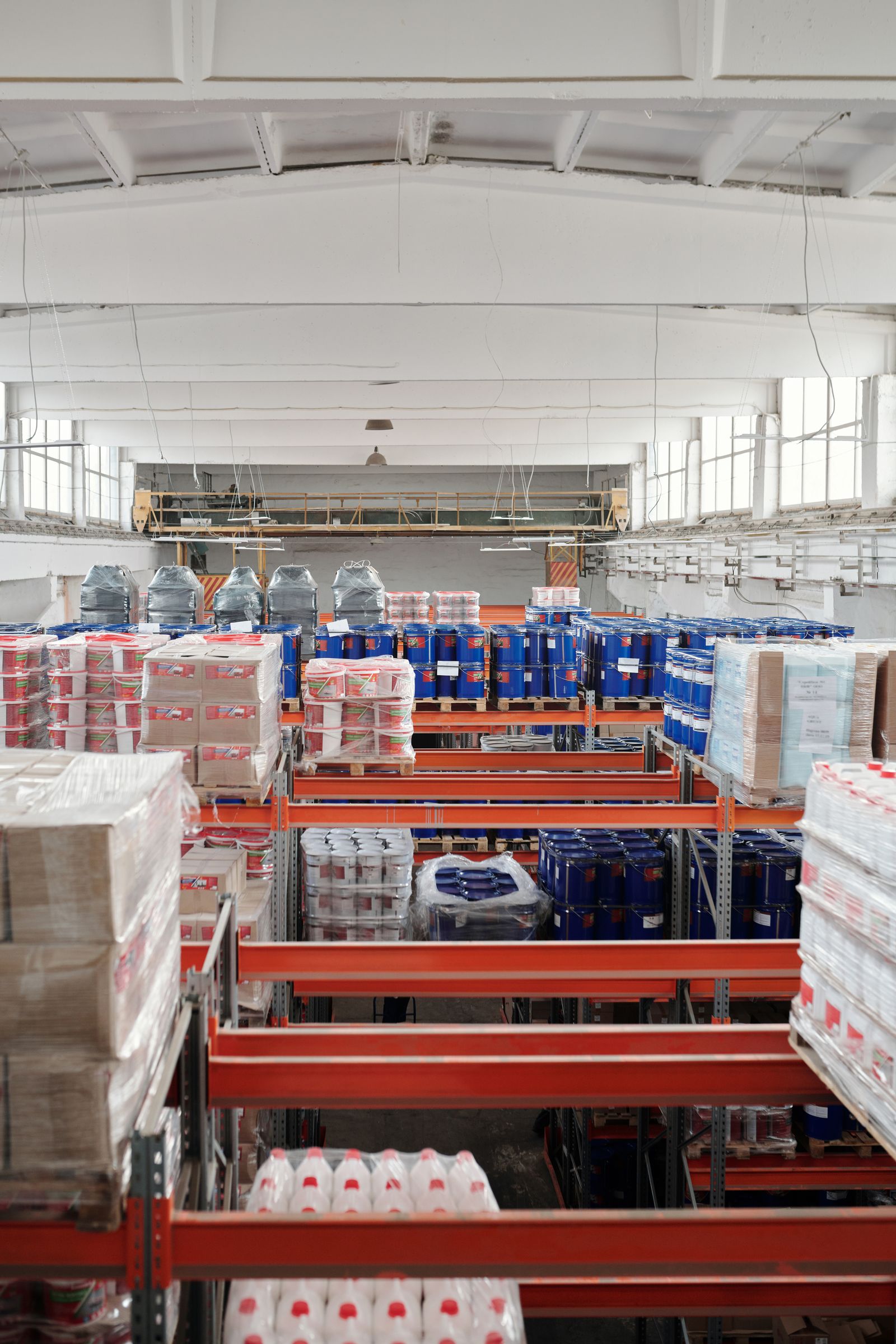
Dubai warehouse and office rents kept rising in H1 2026 even as residential slowed because commercial and industrial demand followed different drivers: warehouse tenants mostly renewed at higher rents, and offices saw strong sales and rent growth. The key caution is that new warehouse leases fell by more than 50% and office quarterly momentum is moderating.
As Residential Slows, Why Are Dubai Warehouse and Office Rents Still Rising?
In the first half of 2026, Dubai home prices declined and secondary-market transactions fell by about 29%. Over the same period, warehouse rents rose by about 12.5% year-on-year, and the value of office sales nearly tripled.
This divergence matters for anyone building a property portfolio, because the commercial and industrial sector moves on different drivers from residential. But the data also carries signs of slowing that should be read before assuming the rise will continue.
What happened?
Warehouses (Cavendish Maxwell, reported by IndexBox on 21 September 2026)
- Warehouse rental value in H1 2026: AED 1.8 billion (+10% year-on-year).
- Average rent increase: about 12.5% year-on-year.
- Renewals: 8,200 contracts (+22% year-on-year) — the highest half-year figure on record.
- New contracts: down more than 50% compared with H1 2025.
- Total lease contracts: −4.5% year-on-year (about 10,000 contracts).
- Rent growth by area: Jebel Ali 15.5%, Dubai Industrial City 15%, Ras Al Khor about 14%.
Offices (Cavendish Maxwell, reported by Khaleej Times on 6 August 2026)
- Office sales in H1 2026: AED 15.8 billion, an increase of about 200% year-on-year and double the H2 2025 total.
- Number of transactions: 2,600 (+38%).
- Average rent: AED 189 per sq ft per year (+14%).
- Off-plan accounts for 65% of office transactions.
- Supply: 92,300 sq m added in H1; total stock 9.46 million sq m, expected to reach 10.7 million sq m by 2028.
ValuStrat Q2 indicators (reported by Khaleej Times on 21 July 2026)
- Office prices: +3.7% quarter-on-quarter; +13.9% year-on-year.
- Industrial and logistics: +8.4% quarter-on-quarter; +17.7% year-on-year.
- Warehouse asking rents: +11.9% quarter-on-quarter.
- For comparison — residential: −4% quarter-on-quarter.
Office transaction prices also reached a record AED 2,045 per sq ft according to ValuStrat.
What does the data say?
1. Warehouses: tenants stay and pay more
The most important number in the warehouse data is not the rent increase, but renewals up 22% while new contracts fell by more than half. That is the exact opposite of residential, where new leases now outnumber renewals because tenants can find cheaper alternatives.
Analytical reading: a "stay and pay more" pattern usually suggests that available alternatives are limited or expensive, so tenants prefer to renew at a higher rent rather than move. The published data does not give occupancy rates or vacant supply, so this is an inference rather than an established fact.
The fall of more than 50% in new contracts can be read in two ways:
- A shortage of space available for new leases, which supports rents.
- Or fewer new companies entering the market, which would be a sign of weaker demand.
The available data does not allow us to decide between the two.
2. The nature of demand: small units
About 70% of warehouse leases are for units under 5,000 sq ft, and more than half are between 2,000 and 5,000 sq ft. Demand is therefore led by small and medium-sized businesses and last-mile delivery, more than by large logistics centres.
3. Offices: strong growth, but momentum is slowing
Vidhi Shah, director and head of commercial valuation at Cavendish Maxwell, said year-on-year indicators remain positive, but quarterly trends point to a moderation in office market momentum.
Two observations:
- 65% of office transactions are off-plan, meaning a large part of demand is investment demand that depends on future delivery, not immediate occupier demand.
- The average off-plan office price rose 133% to AED 8.3 million. This most likely reflects a change in the type of offices sold — larger units or pricier locations — more than a rise in the price of the same office. This is an interpretation, not an official figure.
What does this mean for the Dubai market?
- Diversification: the data shows the commercial and industrial sector did not follow residential in 2026. That does not guarantee the gap will last, but it supports the idea that a portfolio split between the two faces different risks.
- Yield: higher rents raise the yield for existing owners. New buyers, however, also pay more — the industrial price index is up 17.7% year-on-year — so higher rents do not necessarily mean a higher yield for them.
- Future office supply: stock growing from 9.46 to 10.7 million sq m by 2028 is an increase of about 13%. If demand slows at the same time, rental growth may ease.
Who is affected?
- Owner of a leased warehouse: in a strong position at renewal, especially in Jebel Ali, Dubai Industrial City and Ras Al Khor.
- Company renting a warehouse: higher operating costs and limited options to relocate.
- New warehouse investor: enters at higher prices and should calculate yield on today's price, not historical returns.
- Off-plan office buyer: depends on demand at handover, at a time when supply is growing and momentum is slowing.
- Owner of a leased ready office: benefits from rising rents for now.
What we don't know yet
- Occupancy rates for warehouses and offices are not available in the sources I reviewed.
- Q3 2026 commercial data has not been released yet.
- The effect of the situation in the Strait of Hormuz on trade and warehouse demand: it could raise demand for local storage, or weaken re-export activity. No data yet supports either direction.
- I could not access the original Cavendish Maxwell warehouse report; the figures here come from a published summary.
What to watch next
- The ratio of new warehouse leases to renewals: if new leases recover, demand is expanding.
- Warehouse rents in Jebel Ali and Dubai Industrial City in Q3.
- The quarterly change in office prices: does the slowdown continue?
- The office delivery schedule to 2028.
- Trade volumes at Jebel Ali Port, as an indicator of logistics demand.
Conclusion
Dubai's industrial and office sector is so far moving in a different direction from residential: higher rents, and tenants renewing rather than moving. But the fall in new warehouse leases and the slowing quarterly momentum in offices mean growth may not continue at the same pace. Decisions here require calculating yield on today's entry price, not last year's performance.
Frequently asked questions
Are warehouse rents rising in Dubai? Yes. They rose by about 12.5% year-on-year on average in H1 2026 according to Cavendish Maxwell, and by 15.5% in Jebel Ali.
Where are warehouse rents rising most? In Jebel Ali (15.5%), Dubai Industrial City (15%) and Ras Al Khor (about 14%).
Is Dubai's office market still growing? Year-on-year, yes: rents rose 14% and sales reached AED 15.8 billion in H1. But Cavendish Maxwell points to slowing quarterly momentum.
Is commercial property better than residential right now? The data shows stronger commercial performance in 2026, but the comparison depends on entry price, net yield after fees, VAT and vacancy periods, and on the investor's profile.
October 2026 update: Since 1 October 2026, new truck movement restrictions apply across Dubai, with Emirates Road exempt, which makes route access a core factor in evaluating any warehouse. Read the details in Dubai's new truck restrictions and what they mean for warehouse location.
Sources
- IndexBox — Dubai Warehouse Rents Reach AED1.8B in H1 2026 (summary of a Cavendish Maxwell report), 21 September 2026: https://www.indexbox.io/blog/dubai-warehousing-rents-hit-aed18-billion-in-h1-2026/
- Khaleej Times — Dubai office sales nearly triple to Dh15.8 billion in H1 2026, 6 August 2026 (Cavendish Maxwell): https://www.khaleejtimes.com/business/dubai-office-sales-nearly-triple-to-dh158-billion-in-h1-2026
- Khaleej Times — Dubai property market stabilises as home price declines ease, 21 July 2026 (ValuStrat): https://www.khaleejtimes.com/business/property/dubai-property-market-stabilises-as-home-price-declines-ease
- fäm Properties — Dubai Real Estate Transactions Report H1 2026: https://famproperties.com/dubai-real-estate-transactions-report-h1-2026
Read also:
Sources & Official References
- governmentDubai Land Department (DLD)
- governmentUAE Government Portal — Property & Housing
- governmentUAE Federal Tax Authority (VAT)
Frequently Asked Questions
Related Listings

Exclusive Freehold Villa Plot in Dubai Hills Estate | Ready-to-Build with Approved G+1 Design
Emaar (Dubai Hills Estate) · Dubai Hills Estate, Dubai
AED 18,362,500
Binghatti House | 2BR Apartment | in JVC | HOT
Binghatti · JVC
1,605,000 AED
Binghatti Crest | 3BR Apartment | in JVC | HOT
Binghatti · JVC
1,800,000 AED (Furnished)
Equiti Home | 1BR Apartment | in Al Furjan | HOT
BNH Real Estate · Al Furjan
970,000 AED
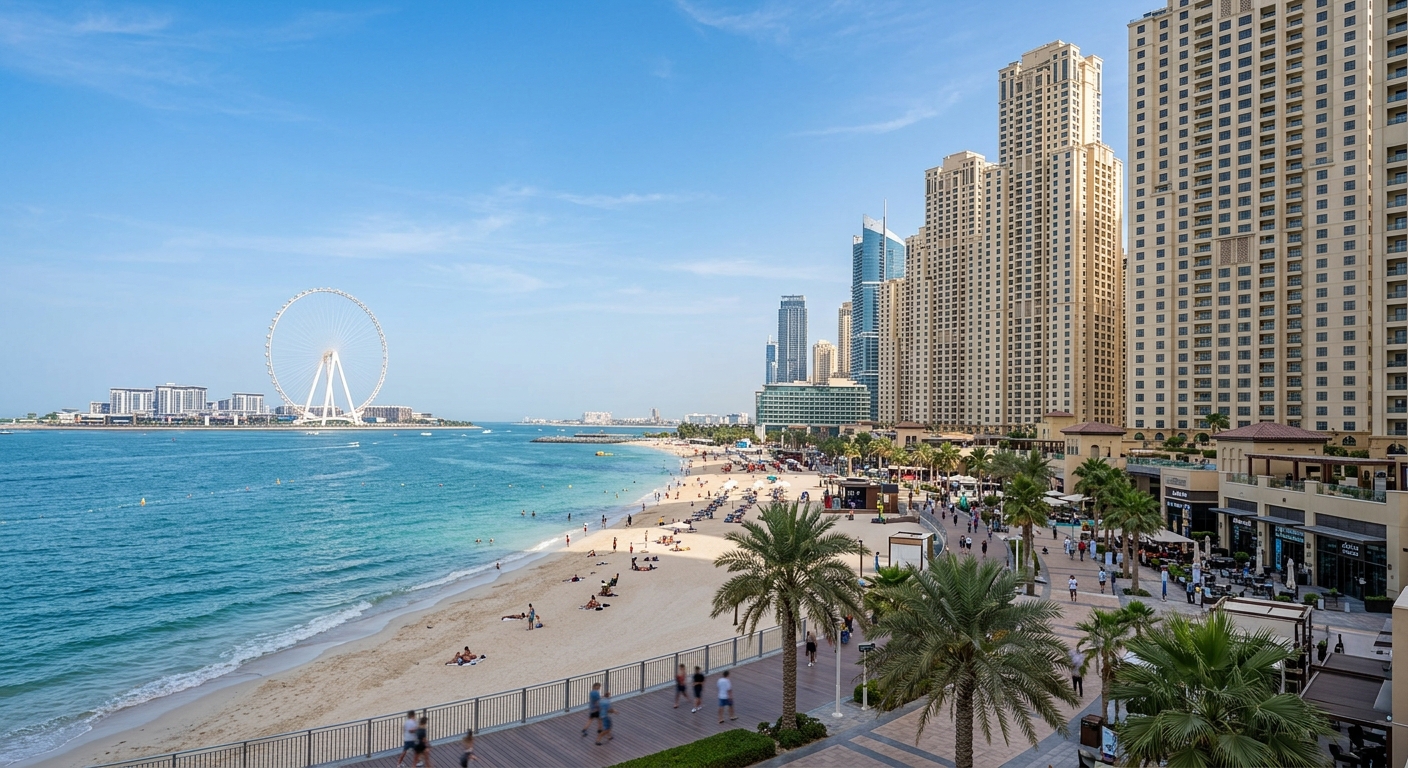
FIVE Luxe Hotel & Residence | 5BR + Maid Hotel Apartment | in JBR | HOT
FIVE Holdings · JBR
25,000,000 AED / 25,000,000 AED (Furnished)
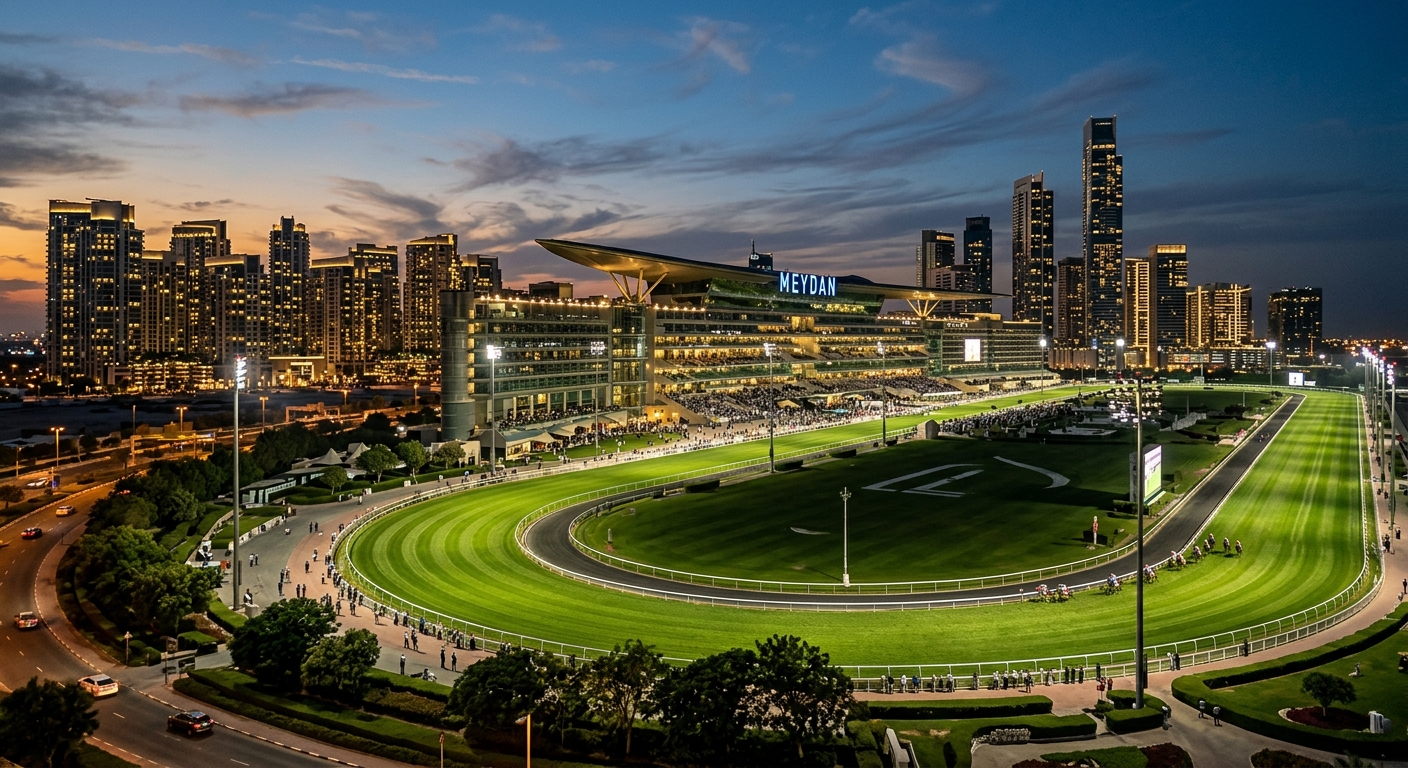
Azizi Gardens | 1BR Apartment | in Meydan MBR | HOT
Azizi · Meydan MBR
930,000 AED
Match My Requirement
Tell us your budget and preferences — we'll match you with live Dubai & Abu Dhabi inventory within 24h.
Related Articles

Dubai's November 2026 Launches: Palm Springs and SHIONE — What Is Confirmed, What Is Still Broker Talk, and How to Read Both
Two Dubai launches landed in November 2026 and they could not be more different in how much you can actually verify. SHIONE by BEYOND is fully documented: AED 3bn, 603 residences, two towers of 21 and 20 storeys, handover Q4 2030. Nakheel's Palm Springs is not: as of 1 November there was no official brochure, price list or payment plan, and every figure circulating came from broker reports. Here is the verified detail on both, the gap between them, and the questions to ask before you sign anything.

Dubai Warehouse Rents 2026: New Leases Collapsed 52% While Renewals Hit a Record — What Tenants and Investors Should Do Now
Dubai warehouse rents rose 12.4% year-on-year in H1 2026, but the structure underneath changed: new leases fell 51.8% to about 1,800 while renewals rose 21.6% to a record 8,200. Tenants are staying put because there is nowhere better to go. Meanwhile demand for boxes above 100,000 sq ft jumped from 7.8% to 27% of requirements. Here is what the data means if you are renewing, relocating, or buying an industrial asset.

Dubai's New Truck Restrictions from 1 October 2026: Why Your Warehouse Location Matters More Than Ever
Dubai's RTA and Police now restrict truck movement on key roads, with Emirates Road exempt. Banned roads, hours, permits, and what it means for choosing a warehouse location.