
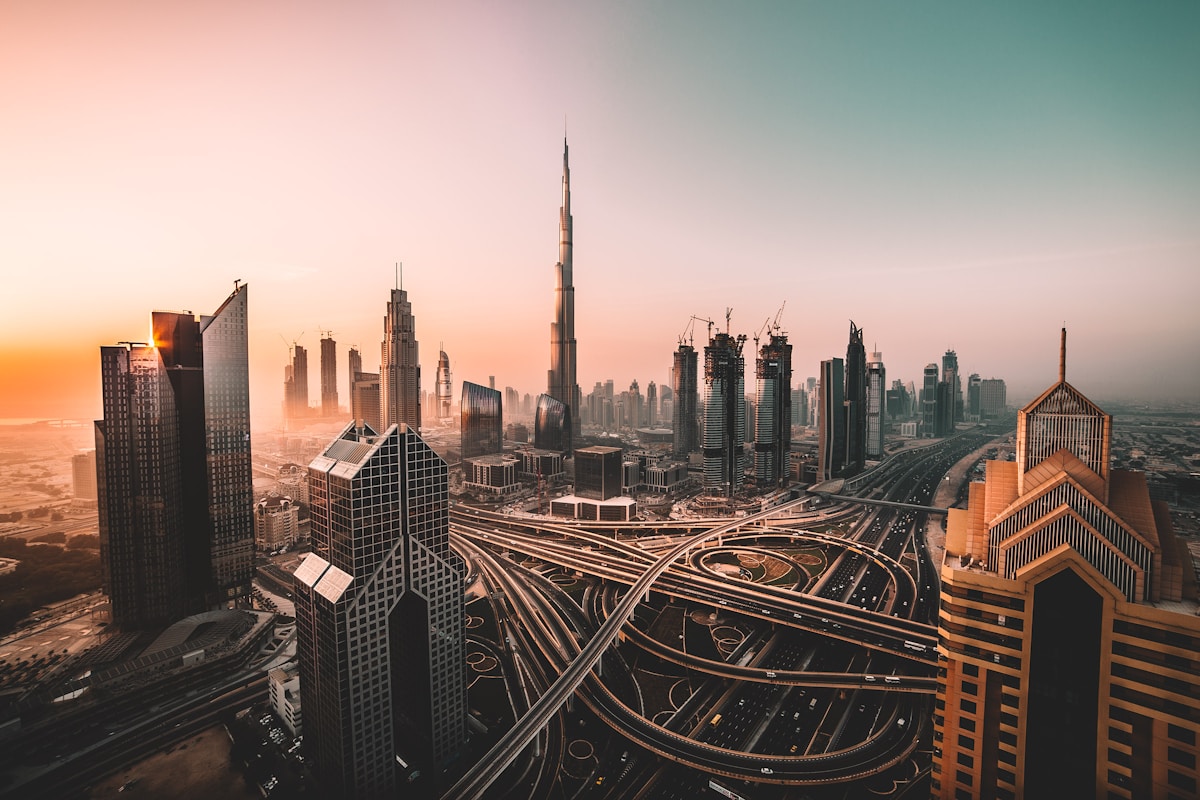
In short: Dubai is on course for its highest annual residential completion volume since 2008 — around 55,600 units in 2026, with more than 60,000 projected for 2027, per Cushman & Wakefield Core's H1 2026 report (Khaleej Times, 20 August 2026). But the scheduled pipeline is far larger than the delivered one: only about 186,000 of roughly 525,000 planned units had passed 20% construction progress at the time of that report, so a large share of "scheduled" completions will not arrive on time. The number that matters for your decision is not the headline pipeline. It is how many keys actually turn in your community, in your product type, in your quarter.
Key numbers
- ~55,600 units expected to complete in Dubai in 2026, the highest annual volume since 2008, with ~32,000 of those in H2 — Cushman & Wakefield Core H1 2026, via Khaleej Times, 20 August 2026.
- 38,000 units actually delivered in the first nine months of 2026, up 41.4% year-on-year, including ~12,400 in Q3 — Cavendish Maxwell Q3 2026, via Khaleej Times and Construction Week Online, 2 November 2026.
- 24,400 units scheduled for the rest of 2026, against Cavendish Maxwell's own expectation of 7,300–12,200 based on historical materialisation rates — 2 November 2026.
- ~186,000 of ~525,000 planned units had passed 20% construction progress — Cushman & Wakefield Core H1 2026, 20 August 2026.
- Apartment launches −58%, villa launches −78% year-on-year in H1 2026; Q3 2026 project launches down more than 70% — C&W Core (20 August 2026) and Cavendish Maxwell (2 November 2026).
- 4,807,185 residents in Dubai in late September 2026, up 226,885 since the start of the year — Dubai Data and Statistics Establishment, via Gulf News and Emarat Al Youm, 29 September 2026.
- ~27,000 homes completed in 2024 — 58% of projected supply — ValuStrat, 31 January 2025.
Why everyone is quoting a different number
You have probably seen 18,000, 24,800, 38,000, 55,600, 56,600, 120,000 and 136,100 all described as "Dubai supply." They answer three different questions.
Delivered and counted: CBRE put H1 2026 completions at about 18,000 units (Khaleej Times, 29 July 2026); Cavendish Maxwell put the same half-year at 24,800 (30 July 2026) and the first nine months at 38,000 (2 November 2026); Savills counted about 27,300 handovers in Q2 2026 alone (21 July 2026) while Cushman & Wakefield Core counted "more than 13,200" in that quarter (Khaleej Times, 9 August 2026). Each firm defines a completion differently — building completion certificate, Ejari readiness, developer handover notice, or DLD registration.
Expected for the year: ~55,600 (Cushman & Wakefield Core) and ~56,600 (Colliers UAE Q2 2026, via Khaleej Times, 2 September 2026) — forecasts with a delay haircut applied. Scheduled on paper: ~120,000 for 2026 per Fitch Ratings (Arabian Business, 29 May 2025), 131,234 per ValuStrat (18 February 2026), 136,100 for 2027 and 155,700 for 2028 per Cavendish Maxwell, and a 2027 peak of 160,700 per betterhomes (TradeArabia, 17 July 2026).
Read in that order, this is not an oversupply shock. It is a record delivery year running at roughly a third to a half of what the paper schedule promised.
Delivery by year: schedule versus reality
| Year | Scheduled / projected on paper | Actually delivered | Source |
|---|---|---|---|
| 2024 | — (only 58% of projection met) | ~27,000 | ValuStrat, 31 Jan 2025 |
| 2025 | ~90,000 | ~36,200 (26,810 apartments + 9,382 villas) per ValuStrat; ~40,000 per Cavendish Maxwell | Fitch Ratings, 29 May 2025; ValuStrat, 18 Feb 2026; Cavendish Maxwell, 2 Nov 2026 |
| 2026 | ~120,000 (Fitch) / 131,234 (ValuStrat) | 38,000 to 30 Sept; ~55,600 expected full-year | Fitch, 29 May 2025; ValuStrat, 18 Feb 2026; Cavendish Maxwell, 2 Nov 2026; Cushman & Wakefield Core, 20 Aug 2026 |
| 2027 | 136,100 (Cavendish Maxwell) / 160,700 (betterhomes) | 60,000+ projected | Cavendish Maxwell, 2 Nov 2026; betterhomes via TradeArabia, 17 Jul 2026; Cushman & Wakefield Core, 20 Aug 2026 |
The most useful line in that table is 2024: ValuStrat recorded about 27,000 completions, which it described as 58% of projected supply for the year and the lowest figure in six years. A 58% materialisation rate is not a rounding error. It is the base rate to apply to any pipeline figure someone quotes at you.
Schedule versus reality: what the 20% threshold tells you
Cushman & Wakefield Core's H1 2026 finding is the most actionable number here: of roughly 525,000 planned units through 2030, only around 186,000 had passed 20% construction progress (20 August 2026).
Construction risk is front-loaded. A project that has cleared foundations, structure and a meaningful share of its contractor commitments is expensive to stop; one still at excavation can be re-phased with a letter. C&W Core's own view is that well-advanced projects should finish roughly on schedule, while those with little capital deployed are the ones that move (Khaleej Times, 15 August 2026). Savills saw the same from the other side: developers stretching stated timelines from roughly three years to four and phasing releases in a way that is "reducing near-term absorption pressure" (21 July 2026).
So before you price a community's 2027 supply risk, find out what share of its pipeline is past structure. A brochure handover date is a plan. A poured slab is evidence.
Where it is landing
Two sources I could verify put numbers on community concentration, and they broadly agree. ValuStrat (18 February 2026) found Jumeirah Village Circle carrying about 10% of ongoing projects, Business Bay about 6%, and DAMAC Lagoons, Jumeirah Lake Towers and Dubai Hills Estate about 4% each, out of more than 220,000 units under construction through 2029. A Khaleej Times analysis (11 February 2026) put roughly 45% of under-construction stock in five districts: JVC/JVT, Dubai South, MBR City, Business Bay and Dubailand Residence Complex. Cavendish Maxwell named JVC, Dubai South, Dubai Science Park and Business Bay as the growth corridors for upcoming apartment supply (30 July 2026).
The mix is lopsided: apartments are roughly 80% of the upcoming pipeline and villas about 20% (Khaleej Times, 15 August 2026), with apartments at 83% of remaining 2026 supply (Cavendish Maxwell, 2 November 2026). A dense apartment district absorbing thousands of units in twelve months is a different proposition from a villa community with a few hundred homes due. For where rents are moving as a result, see where rents are holding and where they are slipping; for which price bands are adjusting, see the correction by segment.
The biggest named handovers of Q2 2026
| Project | Type | Units |
|---|---|---|
| Crest Grande, Sobha Hartland | Apartments | 965 |
| Malta 1, DAMAC Lagoons | Villas | 760 |
| Skyhills Residences 1, Dubai Science Park | Apartments | 635 |
| Jebel Ali Village Townhouses, Phases 1–3 | Villas / townhouses | 614 |
| City Tower, Sheikh Zayed Road | Apartments | 608 |
| Costa Brava 1, DAMAC Lagoons | Villas | 555 |
| Elora, The Valley | Villas | 430 |
Source: Cushman & Wakefield Core H1 2026, via Khaleej Times, 20 August 2026.
Note the pattern: the largest single handover in the quarter was 965 units. Dubai's record year is being delivered by dozens of mid-sized projects, not a handful of mega-towers — which spreads the impact across many sub-markets instead of flooding one.
Absorption: the demand side of the same equation
Dubai's population reached 4,807,185 in late September 2026, up 226,885 since the start of the year, per the Dubai Data and Statistics Establishment (Gulf News and Emarat Al Youm, 29 September 2026). The emirate ended 2025 at about 4.58 million after 7.5% growth that year (TradeArabia). Set that against 38,000 homes delivered in the first nine months of 2026 and you get roughly six new residents per newly delivered home — my own calculation from those two published figures, and a crude one, since household sizes vary by segment and new residents also absorb existing vacant stock.
Two single-source reference points, estimates rather than facts: fäm Properties' CEO put Dubai's historical absorption at around 35,000 ready homes a year against 2026 handovers he expected at 40,000–50,000 (Khaleej Times, 8 February 2026) — a modest overshoot, not a flood; and fäm's April 2026 analysis found 71.45% of the 426,182 units scheduled for 2026–2029 already sold (20 April 2026), which is physical supply still arriving, but not unsold developer inventory.
The early evidence says absorption is working, with friction. Bayut/dubizzle's Q3 2026 data showed affordable and mid-tier asking prices per square foot generally moving less than 3% in the quarter, and the company's Matt Gregory said new supply had not yet significantly affected asking prices in the communities it tracks — adding that the effect should show more clearly in the Q4 report due in January (Khaleej Times, 29 October 2026). Cavendish Maxwell's Q3 figures show the pressure arriving in rents first: average sale prices at AED 1,644 per sq ft in September 2026, down 2.2% year-on-year but up 0.3% quarter-on-quarter, while 21.4% of rental renewals recorded a reduction versus the previous contract, up from 4.8% in Q1 (2 November 2026).
The 2008 comparison, honestly
"Highest since 2008" does a lot of emotional work in headlines, so here is what actually happened. Colliers International's Dubai House Price Index peaked in Q3 2008 then fell 41% between Q4 2008 and Q1 2009 — a blended average residential rate dropping from AED 1,770 to AED 1,037 per square foot, back to Q2 2007 levels (Colliers, 29 April 2009). Five years later, Cluttons' Summer 2013 report still had prices 31.1% below the 2008 peak (Gulf News).
Supply was not the cause in 2008. The trigger was a global credit freeze arriving at a market with no escrow protection, speculative off-plan flipping on minimal equity, and a banking system that stopped lending overnight. Today's market has mandatory project escrow, mortgage loan-to-value caps, and — per CBRE's Q2 2026 data — a correction already visible in volumes rather than deferred: just under 37,000 Dubai residential sales in Q2 2026 against more than 51,000 a year earlier, a 29% drop, with sales value of AED 88 billion against nearly AED 154 billion (Khaleej Times, 29 July 2026). A market repricing in the open over several quarters is a different animal from one that repriced in a single quarter after a credit shock. For the longer view, see three historical Dubai price cycles and the data behind the first annual price decline since 2021.
What this means for you
Buying to hold and rent. The supply wave is negotiating leverage, but it is community-specific. In a district carrying thousands of 2026–2027 completions, assume a longer first lease-up and underwrite a vacancy you would rather not need. Check your target area against rental yields by area before accepting a developer's projection.
Buying off-plan now for 2028–2029 delivery. You are entering the thinnest part of the delivery curve, because launches have collapsed. A genuine structural argument — one that still depends on your specific developer actually building.
Taking handover in the next six months. Your risk is quality and snagging, not price: in a record delivery year, contractor and consultant capacity is stretched. Do not sign off without a full inspection — the handover inspection checklist covers what to test and in what order.
Selling ready stock. You compete against brand-new keys in the same postcode, often with a payment plan attached. Price against the new-build alternative, not against what your neighbour achieved in 2025.
Business owner or commercial investor. Residential supply has little direct bearing on warehouse, labour accommodation or office fundamentals, which run on different cycles. Do not read a residential handover headline as an industrial pricing signal.
Buy into the wave, or wait? A decision framework
There is no universal answer, and anyone giving you one is selling. Work through five checks instead.
- How advanced is the project? Past structure and into fit-out behaves differently from excavation. The 20% construction threshold is the dividing line C&W Core itself uses.
- How concentrated is the community's pipeline? Ask for that community's scheduled completions for the next eight quarters, not the city's.
- Rent or resale? If rent, you are exposed now — 21.4% of renewals already repriced downward in Q3 2026. If a 2029-plus resale, the launch collapse works in your favour.
- What does a six-month void do to your numbers? Run it. If a two-quarter vacancy breaks the investment, the entry price is wrong regardless of timing.
- What are you paid to take the risk? Developers are not competing on headline price alone: C&W Core recorded deferred launches alongside payment-plan changes, DLD fee waivers, bulk discounts and higher broker commissions in Q2 2026. Value those incentives in cash, not marketing language.
Waiting is a position, not a neutral act. If your plan is to wait, define the evidence that would make you act — otherwise you are not waiting, you are drifting.
The honest risk section
The downside is real. If a meaningful slice of the 2027 pipeline lands on schedule rather than slipping, the rental market absorbs a second heavy year in a row. Rents are already moving: Cushman & Wakefield Core recorded average rents down 6% quarter-on-quarter in Q2 2026, CBRE down 2.6% year-on-year and 6.2% quarter-on-quarter, Savills average falls of 8–10% across major communities. A leveraged purchase underwritten on 2025 rents can stop working.
The unknowns are structural. Nobody — including the consultancies — knows the real materialisation rate for 2027. ValuStrat's 2024 base rate was 58%; Cavendish Maxwell's working range for the rest of 2026 implies 30% to 50%. If 2027 materialises at 70%, that is 95,000 units, not 60,000, and the arithmetic changes.
Who this does not suit. Anyone who needs a specific rent from a specific month to service a specific loan. Anyone on a three-year flip horizon in an apartment district carrying a heavy pipeline — see the numbers behind why off-plan deal volumes fell. And anyone whose entry depends on a projected return rather than a price that works at today's rents. Every figure above is a published third-party market figure with a date and a source; none of it forecasts what any individual property will do.
What is still unclear
- No official completion series. Every completion figure here comes from a private consultancy with its own definition. I could not locate an official DLD or Dubai Statistics Centre residential completion count for 2026 to arbitrate between 18,000, 24,800 and 27,300 for overlapping periods.
- 2027's real number. C&W Core says 60,000+; Cavendish Maxwell lists 136,100 scheduled; betterhomes says 160,700. No source I found reconciles the gap.
- Whether the launch collapse becomes a 2029–2030 shortage. The mechanics point that way, but no named consultancy has published a quantified shortfall estimate I could verify, and Cavendish Maxwell still shows 155,700 units scheduled for 2028.
- Full-year 2026 and the Q4 picture. Bayut/dubizzle expects the supply effect on prices to show more clearly in its Q4 report due in January 2027. Treat anything about full-year 2026 before then as an estimate.
- Household-level absorption. No current official figure for average household size in Dubai was available to me, so the residents-per-new-home ratio above is indicative only.
Verify before you act
Market figures move every quarter and consultancies revise them. Before you commit capital, confirm the project's registration and escrow status with the Dubai Land Department and RERA directly, confirm the scheduled completion date on the project's official record rather than from a brochure, and ask for the community-level completion schedule in writing. Fees, thresholds and timelines change — check them against the live official source on the day you act, not against this article.
A strategic consultation, not a sales pitch
If you are weighing a purchase inside this handover window, the useful conversation is not "which unit." It is a diagnostic: what your capital is actually exposed to, what a two-quarter void does to your position, and whether your target community's pipeline supports your thesis or works against it. Book a strategic consultation and we will work through your numbers before anyone shows you a floor plan.
Sources
- "Dubai set for highest annual home deliveries since 2008 as new launches slow" (Cushman & Wakefield Core H1 2026), Khaleej Times, 20 August 2026 — https://www.khaleejtimes.com/business/dubai-set-for-highest-annual-home-deliveries-since-2008-as-new-launches-slow (accessed 2026-11-04)
- "Dubai home prices, rents decline as supply rises; 32,000 more units due this year" (Cushman & Wakefield Core Q2 2026), Khaleej Times, 9 August 2026 — https://www.khaleejtimes.com/business/dubai-home-prices-rents-decline-as-supply-rises-32000-more-units-due-this-year (accessed 2026-11-04)
- "Dubai housing pipeline stays strong through 2030 despite headwinds," Khaleej Times Business Technology Review, 15 August 2026 — https://www.khaleejtimes.com/business-technology-review/dubai-housing-pipeline-stays-strong-through-2030-despite-headwinds (accessed 2026-11-04)
- "Dubai delivers 38,000 new residential units in first nine months of 2026" (Cavendish Maxwell Q3 2026), Construction Week Online, 2 November 2026 — https://www.constructionweekonline.com/analysis/dubai-delivers-38000-new-residential-units-in-first-nine-months-of-2026 (accessed 2026-11-04)
- "Dubai rents: 1 in 5 tenants now pays less than before as rentals ease on new supply" (Cavendish Maxwell Q3 2026), Khaleej Times, 2 November 2026 — https://www.khaleejtimes.com/business/dubai-rents-1-in-5-tenants-now-pays-less-than-before-as-rentals-ease-on-new-supply (accessed 2026-11-04)
- "Dubai delivers record 24,800 new homes in H1 2026 as market matures" (Cavendish Maxwell H1 2026), Khaleej Times, 30 July 2026 — https://www.khaleejtimes.com/business/dubai-delivers-record-24800-new-homes-in-h1-2026-as-market-matures (accessed 2026-11-04)
- "Dubai residential real estate shows resilience amid quieter market" (CBRE Q2 2026 and UBP), Khaleej Times, 29 July 2026 — https://www.khaleejtimes.com/business/property/dubai-residential-real-estate-shows-resilience-amid-quieter-market (accessed 2026-11-04)
- "Dubai residential market moderates amid higher handovers in Q2 2026," Savills, 21 July 2026 — https://www.savills.co.uk/insight-and-opinion/savills-news/393062/dubai-residential-market-moderates-amid-higher-handovers-in-q2-2026 (accessed 2026-11-04)
- "Dubai residential market transactions ease 31% to $23.12bn in Q2" (betterhomes Q2 2026), TradeArabia, 17 July 2026 — https://www.tradearabia.com/News/465261/Dubai-residential-market-transaction-ease-31_Percent-to-%2423.12bn-in-Q2/CONS (accessed 2026-11-04)
- "UAE housing supply grows as Dubai prepares for 56,600 new homes by year-end" (Colliers UAE Q2 2026), Khaleej Times, 2 September 2026 — https://www.khaleejtimes.com/business/uae-housing-supply-grows-as-dubai-prepares-for-56600-new-homes-by-year-end (accessed 2026-11-04)
- "Dubai property prices: New supply impact may emerge in coming months" (Bayut/dubizzle Q3 2026; Matt Gregory), Khaleej Times, 29 October 2026 — https://www.khaleejtimes.com/business/dubai-property-prices-new-supply-impact-may-emerge-in-coming-months (accessed 2026-11-04)
- "Will Dubai housing market see an oversupply in 2026?" Khaleej Times, 11 February 2026 — https://www.khaleejtimes.com/business/property/will-dubai-housing-market-see-an-oversupply-in-2026 (accessed 2026-11-04)
- "58 percent of projected residential supply delivered with 27,000 homes completed in Dubai — 2024 report," ValuStrat, 31 January 2025 — https://valustrat.com/pages/58-percent-of-projected-residential-supply-delivered-with-27-000-homes-completed-in-dubai-2024-report (accessed 2026-11-04)
- "Dubai real estate: 220,000 units under construction through 2029," ValuStrat, 18 February 2026 — https://valustrat.com/pages/dubai-real-estate-220000-units-under-construction-2029 (accessed 2026-11-04)
- "Dubai's off-plan pipeline 71% sold through 2029 as demand stays ahead of supply" (fäm Properties), Khaleej Times, 20 April 2026 — https://www.khaleejtimes.com/business/property/dubais-off-plan-pipeline-71-sold-through-2029-as-demand-stays-ahead-of-supply (accessed 2026-11-04)
- "Dubai real estate reaches fork in road over cost of land, off-plan prices" (Firas Al Msaddi, fäm Properties), Khaleej Times, 8 February 2026 — https://www.khaleejtimes.com/business/dubai-real-estate-reaches-fork-in-road-over-cost-of-land-off-plan-prices (accessed 2026-11-04)
- "Dubai population rises by 226,885 since start of 2026" (Dubai Data and Statistics Establishment), Gulf News, 29 September 2026 — https://gulfnews.com/uae/dubai-population-rises-by-226885-since-start-of-2026-1.500692623 (accessed 2026-11-04)
- "«دبي للإحصاء»: 4.807 ملايين نسمة إجمالي سكان الإمارة," Emarat Al Youm, 29 September 2026 — https://www.emaratalyoum.com/business/local/2026-09-29-1.2087537 (accessed 2026-11-04)
- "Dubai's population tops 4.58m by 2025 end, records 7.5% growth," TradeArabia — https://www.tradearabia.com/News/466004/Dubai-s-population-tops-4.58m-by-2025-end-records-7.5_Percent-growth (accessed 2026-11-04)
- "Colliers International Q1 2009 House Price Index for Dubai falls 41%," Europe Real Estate, 29 April 2009 — https://europe-re.com/colliers-international-q1-2009-house-price-index-for-dubai-falls-41-uae/28314 (accessed 2026-11-04)
- "Dubai home prices 31% off 2008 peak rates" (Cluttons, Summer 2013 report), Gulf News — https://gulfnews.com/business/property/dubai-home-prices-31-off-2008-peak-rates-1.1226293 (accessed 2026-11-04)
- "Dubai real estate price forecast amid increased supply — Fitch Ratings," Arabian Business, 29 May 2025 — https://www.arabianbusiness.com/abnews/dubai-real-estate-price-forecast-amid-increased-supply-fitch-ratings (accessed 2026-11-04)
- "Dubai property market posts Dh141 billion in Q3 transactions" (Windmills Group Q3 2026), Khaleej Times, 29 October 2026 — https://khaleejtimes.com/business/dubai-property-market-posts-dh141-billion-in-q3-transactions (accessed 2026-11-04)
Sources & Official References
- governmentDubai Land Department (DLD)
- governmentUAE Government Portal — Property & Housing
Related Listings

Exclusive Freehold Villa Plot in Dubai Hills Estate | Ready-to-Build with Approved G+1 Design
Emaar (Dubai Hills Estate) · Dubai Hills Estate, Dubai
AED 18,362,500
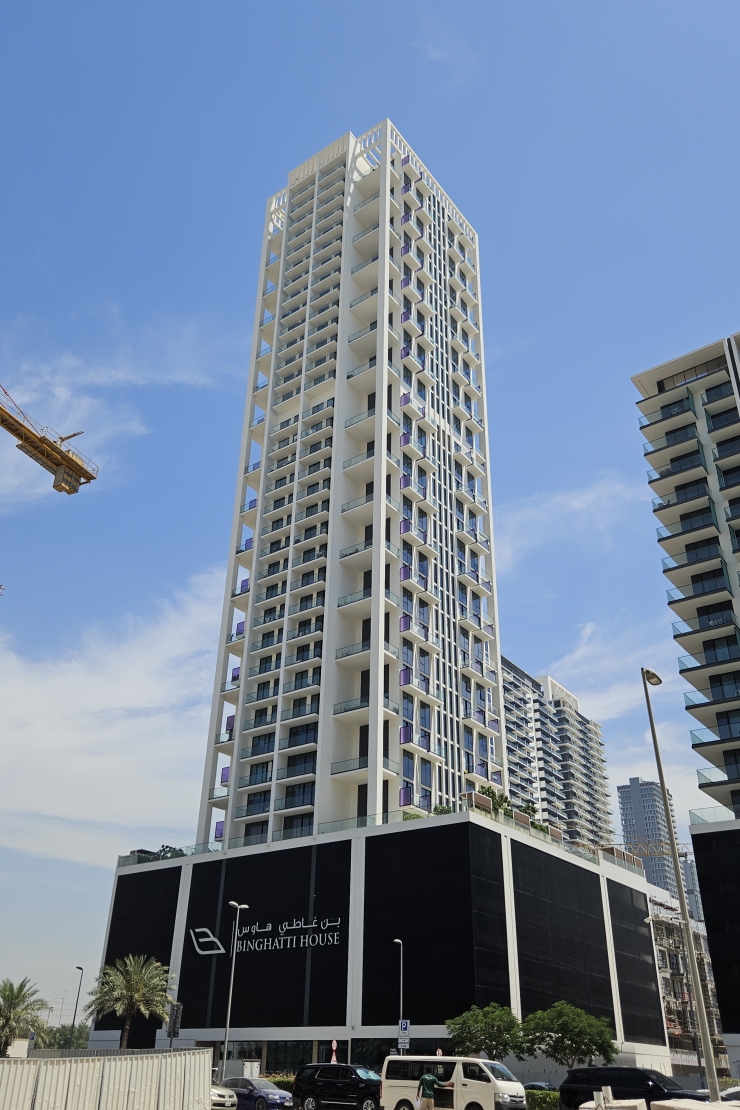
Binghatti House | 2BR Apartment | in JVC | HOT
Binghatti · JVC
1,605,000 AED
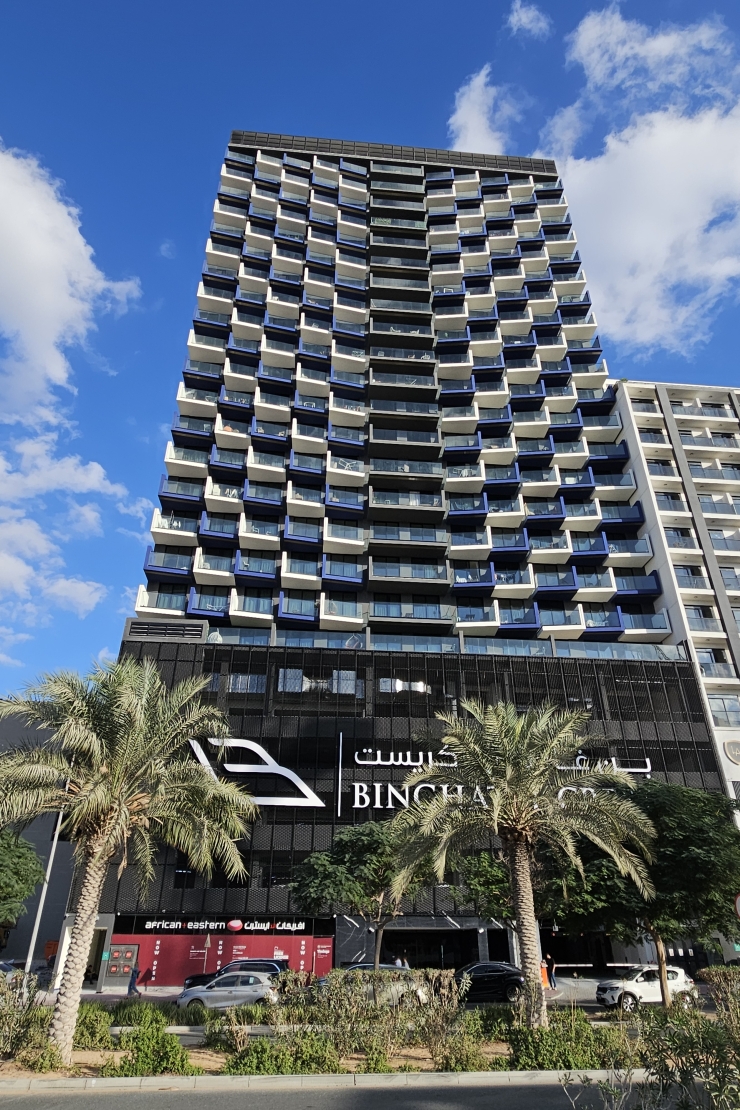
Binghatti Crest | 3BR Apartment | in JVC | HOT
Binghatti · JVC
1,800,000 AED (Furnished)
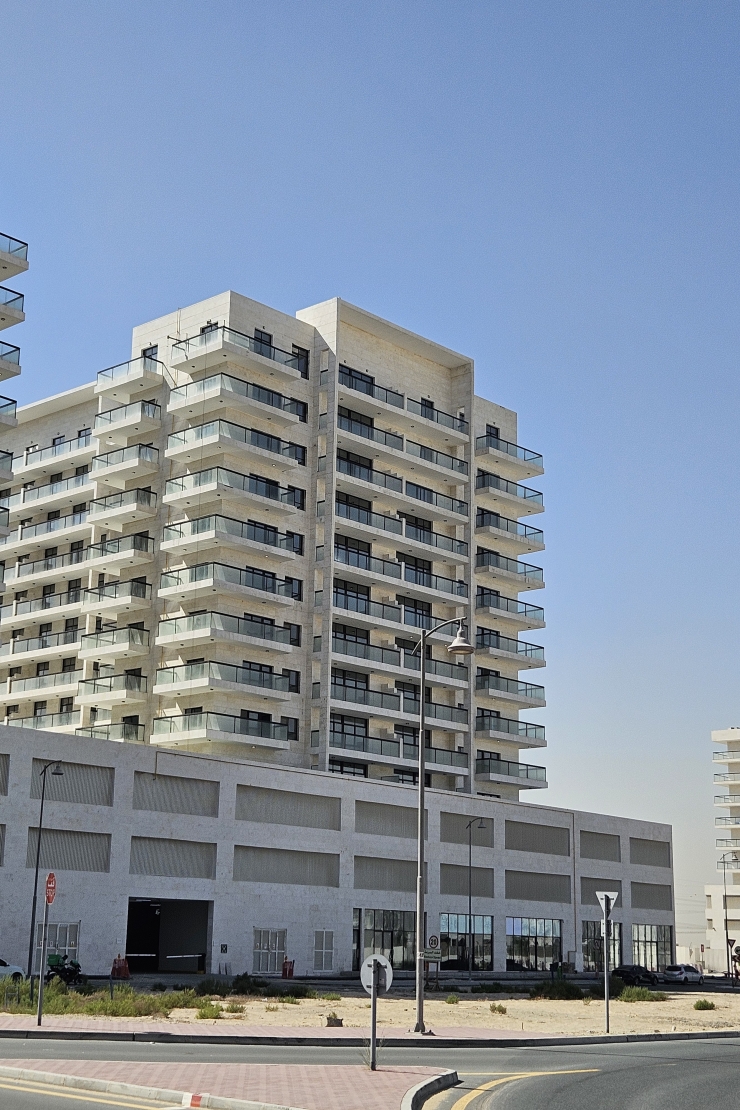
Equiti Home | 1BR Apartment | in Al Furjan | HOT
BNH Real Estate · Al Furjan
970,000 AED
FIVE Luxe Hotel & Residence | 5BR + Maid Hotel Apartment | in JBR | HOT
FIVE Holdings · JBR
25,000,000 AED / 25,000,000 AED (Furnished)
Azizi Gardens | 1BR Apartment | in Meydan MBR | HOT
Azizi · Meydan MBR
930,000 AED
Match My Requirement
Tell us your budget and preferences — we'll match you with live Dubai & Abu Dhabi inventory within 24h.
Related Articles

How to Choose the Right Commercial Location for Your Business
A practical guide for business owners and investors on selecting the right commercial location: accessibility, target audience, competition, cost, infrastructure, and the common mistakes to avoid.

Buying Off the Plan in Dubai as a First-Time Buyer: The Guide Nobody Puts in the Brochure
First-time off-plan buyers are the segment most likely to overpay. Seven specific mistakes account for most of those losses. Name them upfront, avoid them upfront, and the process becomes navigable.

Off-Plan Investment Strategy in Dubai for 2026: Which Trade Fits Which Investor
Yield-first, capital appreciation, and end-user strategies each need different communities, developers and unit types. Choose one and execute the diligence. Do not run three strategies with one unit.