
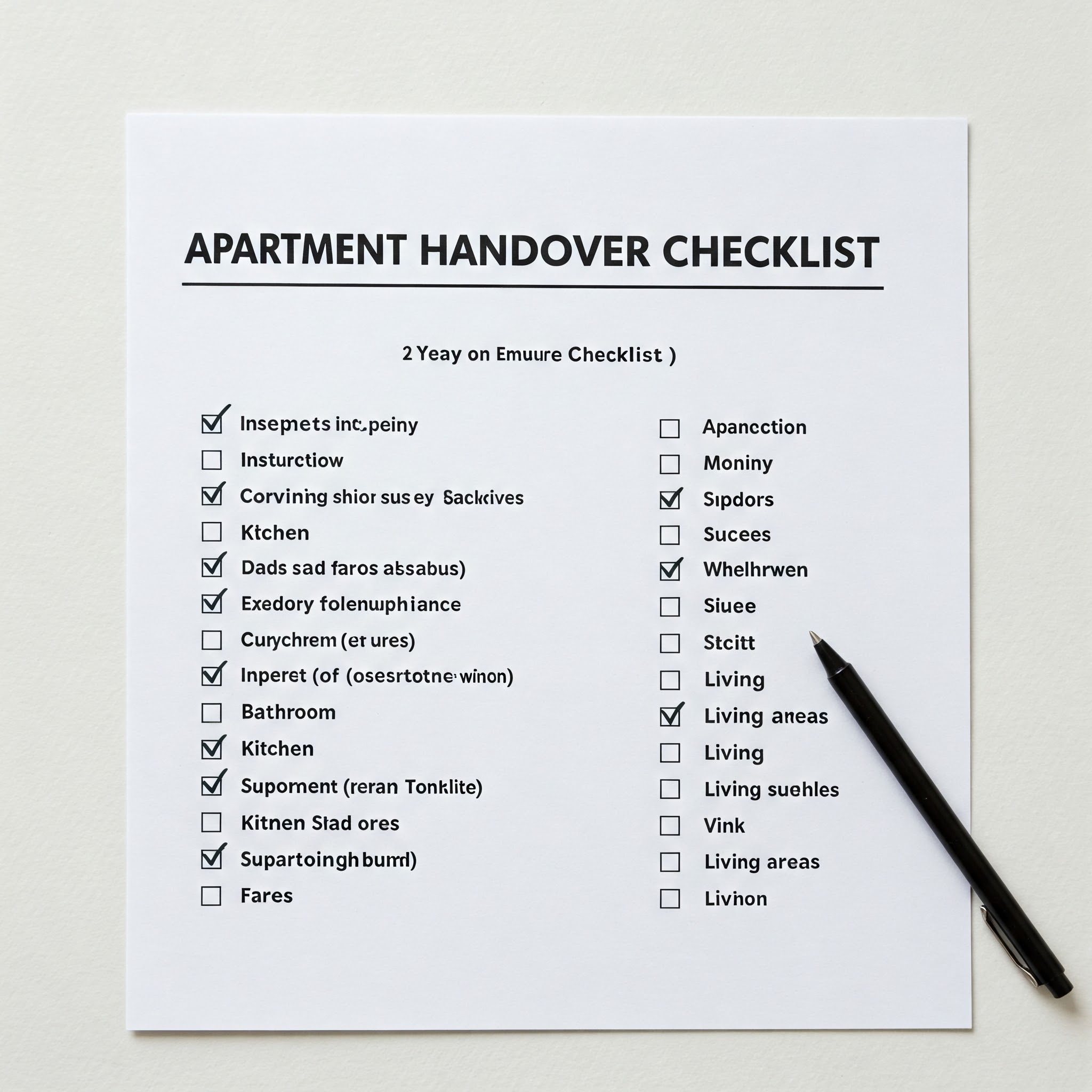
The key takeaway is that you should not accept keys or sign the acceptance certificate until an independent inspection is completed, every defect is logged in writing, and the full handover documents are provided. Handover day is your strongest leverage point for preserving repair responsibility, warranties, and the typical 12-month defects liability period.
Off-Plan Property Handover in Dubai: The Inspection Checklist That Actually Saves Money
Handover day feels like the finish line. It is not. Handover day is the last moment a developer takes any responsibility for snagging, defects, and quality issues without a formal claim process. Buyers who accept the keys and move on lose the leverage that a proper inspection preserves. Here is the checklist that has worked for buyers taking Dubai delivery, section by section, in the order it should be executed.
Before Handover Day — The Prep Work
Two things happen before you walk into the unit.
Request the full set of drawings and specifications from the developer's handover team. Original MEP layouts, floor plans, and any variations recorded during construction. Missing documentation now means missing evidence later.
Book a qualified inspection company independently. Not the developer's inspector. Not the sales agent's referral. A firm with proper indemnity insurance and a documented process. Fees for a full inspection typically run AED 1,500 to 4,000 depending on unit size. That fee is the cheapest insurance in the process.
Section 1: Walls, Ceilings, and Floors
Cracks, chips, uneven tiling, incorrect skirting, uneven paint. Photograph everything visible. Cracks longer than 3mm or wider than 1mm are structural and need immediate flagging. Superficial cracks under 3mm are normal in a new build but should still be logged.
Floors — check for slope by rolling a marble in each room. A functional room should have no visible slope. Bathrooms should slope only toward drains.
Section 2: Doors and Windows
Every door should open smoothly, close cleanly, and lock properly. Windows should seal fully — no visible gap around the frame, no air infiltration. Balcony sliding doors particularly need testing since these are the most common defect point.
Handles, hinges, locks. Test each one. Do not accept "will be fixed after handover" as a resolution — request the fix before accepting keys.
Section 3: Plumbing
Every tap, every drain, every flush. Turn on all taps simultaneously to test water pressure. Fill and drain each sink and bath. Flush every toilet twice. Check under all sinks and behind toilets for visible leaks or moisture.
Water heater — trace it to the unit's main water heater and check the model matches the specification. Do the same for the water softener if the tower has one.
Section 4: Electrical
Every switch, every socket, every fixture. Bring a small plug-in tester and check each socket for correct polarity and earth. Turn on every light. Test any built-in appliances — oven, hob, exhaust, dishwasher — under running conditions, not just power-on tests.
Air conditioning — run each unit for at least 15 minutes and confirm consistent cool air delivery. AC drift or intermittent operation is a common Dubai handover issue and easy to miss if you power on and walk out.
Section 5: Kitchen and Bathrooms
Cabinet alignment, drawer runners, hinge tightness, worktop levelness, silicone joints. Every cabinet should open cleanly and close flush. Silicone should be continuous with no gaps.
Kitchen exhaust — test it actually vents. Some Dubai handovers include a cosmetic hood that vents into the ceiling void rather than externally. Confirm the specification.
Section 6: Balcony and External
Balcony floor tile levels, drainage, and balustrade fixing. External windows and glazing sealed properly. Any external cladding within reach — check for gaps and improper sealing.
The balcony drainage matters. Dubai's occasional heavy rain events flood balconies with poor drainage design.
Section 7: The Documentation Package
Not a physical inspection, but critical. At handover you should receive Oqood or title deed transfer documentation, the DEWA activation package, the community handover pack, all appliance warranties, and the developer's snagging list procedure.
Missing any of these means you cannot complete the ownership transition. Do not accept keys until the paperwork is complete.
What to Do When Defects Are Found
Photograph every defect with a reference object for scale. Log each on the developer's snagging list with a specific location description. Insist on written acknowledgement of every logged item.
The developer typically has a defined defects liability period — usually 12 months — during which structural and mechanical issues must be fixed at the developer's cost. This period starts from the handover date. Logging defects on Day 1 preserves that liability. Discovering them in Month 6 without prior logging weakens the claim.
What "Ready to Accept" Looks Like
Every logged defect either fixed on site or on a written repair schedule with dates. Documentation package complete and handed over. DEWA active. Community services active. Snagging list acknowledged in writing. Warranties provided for all appliances and mechanical systems.
If any of these are missing, do not sign the acceptance certificate. Signing acceptance is what starts the clock on liability transfer. Once signed, resolving issues is harder.
The Practical Sequence
Book the inspector. Do the walk-through. Log defects. Get written acknowledgement. Complete the documentation review. Only then accept keys.
Buyers who follow this sequence recover, on average, materially more value than buyers who accept keys and negotiate afterward.
FAQ
How long is the handover inspection in Dubai? A qualified inspection of a typical apartment takes 2 to 4 hours. A villa can take 4 to 8 hours depending on size and complexity.
Should I use the developer's inspection team? No. Use an independent inspection company with proper indemnity insurance. The developer's inspector has a conflict of interest.
What is the defects liability period in Dubai? Typically 12 months from handover for structural and mechanical defects, with specific coverage varying by contract. Read the SPA for the exact terms on your property.
Can I refuse to accept handover? Yes, if defects are material and unresolved. Refusal must be documented in writing with the specific reasons and the specific defects identified.
What happens if defects are discovered after handover? Log them immediately with the developer and, if within the defects liability period, request repair. Delays in reporting weaken your claim.
Sources & Official References
- governmentDubai Land Department (DLD)
- governmentUAE Government Portal — Property & Housing
Frequently Asked Questions
Related Listings

Skyros Samana | Studio Apartment | in Arjan – Dubailand | HOT
Samana · Arjan – Dubailand
775,000 AED

Binghatti Wraith, Al Jaddaf — Quiet Luxury Apartments from AED 799,999 | Prime Location & Investment ROI
Binghatti Developers · Al Jaddaf, Dubai
AED 799,999

Binghatti Skyflame, Majan — Smart Luxury Living with Off-Plan Investment Upside
Binghatti · Majan, Dubai
AED Price on Request

Oceanz Danube Tower 2 | Studio Apartment | in Dubai Maritime City
Danube · Dubai Maritime City
1,225,000 AED

DAMAC Volta Tower | 1BR Apartment | in Sheikh Zayed Road
DAMAC · Sheikh Zayed Road
2,125,000 AED

Reportage Vista 3 | 3BR Apartment | in Abu Dhabi – Al Reem Island
Reportage Prime · Abu Dhabi – Al Reem Island
1,999,000 AED
Match My Requirement
Tell us your budget and preferences — we'll match you with live Dubai & Abu Dhabi inventory within 24h.
Related Articles

How to Choose the Right Commercial Location for Your Business
A practical guide for business owners and investors on selecting the right commercial location: accessibility, target audience, competition, cost, infrastructure, and the common mistakes to avoid.

Buying Off the Plan in Dubai as a First-Time Buyer: The Guide Nobody Puts in the Brochure
First-time off-plan buyers are the segment most likely to overpay. Seven specific mistakes account for most of those losses. Name them upfront, avoid them upfront, and the process becomes navigable.

Off-Plan Investment Strategy in Dubai for 2026: Which Trade Fits Which Investor
Yield-first, capital appreciation, and end-user strategies each need different communities, developers and unit types. Choose one and execute the diligence. Do not run three strategies with one unit.