

In short: In Dubai the maximum rent increase at renewal is fixed by law, not by the landlord. Decree No. 43 of 2013 ties the permitted increase to how far your current rent sits below the average market rent for comparable units, on a five-step scale from 0% to 20%. That average comes from the RERA-approved Rent Index — since 2 January 2025, the Dubai Land Department's AI-driven Smart Rental Index, which prices at building level using a one-to-five-star classification. Either party must give at least 90 days' notice before expiry to change any lease term, rent included. The caps govern renewals; a new lease on a vacant unit is freely negotiated.
Key numbers
- 2 January 2025 — the Dubai Land Department (DLD) launched the Smart Rental Index (DLD and Dubai Media Office, 2 January 2025).
- 0%, 5%, 10%, 15%, 20% — the five permitted increase steps, Article 1 of Decree No. 43 of 2013, issued 18 December 2013 (decree text published by DLD).
- 90 days — minimum notice to amend any lease term: Article 14 of Law No. 26 of 2007 as replaced by Law No. 33 of 2008.
- 1 to 5 stars — the residential building classification band, on 60+ criteria (The National, 2 January 2025; Property Finder, 17 March 2025).
- −21.74% — Downtown Dubai median apartment asking rent, AED 230,000 to AED 180,000, Q3 2025 vs Q3 2026 (Property Finder via Arabian Business, 12 October 2026).
- 3.5% of annual rent, minimum AED 500, maximum AED 20,000 — the commonly published Rental Disputes Centre filing fee (Leaders Advocates via Mondaq, 21 July 2026). Not confirmed on an official DLD page.
What the Smart Rental Index actually is
The index is the official reference for the average market rent of a comparable unit — not a price list, and not a licence to charge a particular figure. Its single legal job is to supply the "average market rental rate" that Decree No. 43 of 2013 measures your current rent against. DLD launched it on 2 January 2025, describing it as relying on "artificial intelligence technologies and a building classification system" that assesses technical and structural characteristics, quality of finishes and maintenance, location and spatial value, and services such as maintenance, cleanliness and parking management.
Three things changed against the older RERA index.
| Older RERA index | Smart Rental Index (from 2 January 2025) | |
|---|---|---|
| Measured on | Zone averages | Building level, adjusted for area |
| Quality adjustment | None explicit | 1–5 stars, 60+ criteria |
| Updated | Annually | Any time, as contracts register |
Coverage at launch was all residential areas including free zones, with commercial and industrial indexes planned.
The rating attaches to the building, not the unit (Gulf News, 2 January 2025), and your apartment's index value is built from average rents inside that building, adjusted for the area. Majid Al Marri, CEO of DLD's Real Estate Registration Sector, said there is "a certain weightage for the building classification," and an owner who renovates can apply for re-assessment. A tired 1990s block in a prime district therefore no longer indexes at the same rent as a well-run tower next door.
The legal framework
- Law No. 26 of 2007 regulates the landlord–tenant relationship. Article 4 requires a written contract registered with RERA — Ejari — and courts will not hear a dispute on an unregistered lease.
- Law No. 33 of 2008 replaced Articles 2, 3, 4, 9, 13, 14, 25, 26, 29 and 36. The replaced Article 13 lets either party review the rent up or down at expiry and sends them to the Tribunal if they cannot agree; the replaced Article 9 tells the Tribunal to set "similar rent" using RERA's increase criteria, general economic circumstances, the property's condition and similar market rents in the same area. Article 14 sets the 90-day notice.
- Decree No. 43 of 2013 sets the ceilings. Article 2 applies it to all landlords, public and private, "including the special development areas and the free zones, including Dubai International Financial Center," and Article 3 states the average rate is set by the RERA-approved "Rent Index of the Emirate of Dubai."
The permitted-increase brackets
Article 1 of Decree No. 43 of 2013, as published by DLD. The brackets measure how far your current rent sits below the index average.
| Current rent vs index average | Maximum increase on renewal |
|---|---|
| Less than 10% below | No increase |
| 11% to 20% below | 5% of the rent value |
| 21% to 30% below | 10% of the rent value |
| 31% to 40% below | 15% of the rent value |
| More than 40% below | 20% of the rent value |
Two routine misreadings: the cap is a percentage of your current rent, not of the index average, so a landlord cannot jump straight to the index figure if the cap gives a lower number; and if your rent already sits at or above the index average, the permitted increase is zero.
The 90-day notice
Under Article 14 as replaced, the party wanting to change any term must notify the other no less than 90 days before expiry, unless they agreed otherwise in writing. The party seeking the change serves it, so a tenant asking for a reduction carries the same obligation as a landlord asking for an increase. Keep proof of service: a late notice, or none, leaves the contract to renew on existing terms.
How to check your own unit
- Open the Rent Increase Calculator in e-services on dubailand.gov.ae, or reach the index through Ejari, the Dubai REST app or DubaiNow; UAE PASS logs you in.
- Enter the contract expiry date, property type, location, number of bedrooms and current annual rent.
- Read the output: the rental range for a comparable unit, and the permitted increase percentage.
- Compare it against the increase in the notice you were served.
- Keep a dated screenshot. Khaleej Times reported on 5 January 2026 that tenants were answering increase notices with index screenshots, and that increases were revised or paused as a result.
What the output legally means: an indicative official reference, not an automatic entitlement. It sets the ceiling, but obliges neither side to transact at the index average, and under Articles 9 and 13 the Tribunal weighs the property's condition and comparable rents alongside it. Since 2 November 2026, Ejari contracts can also be registered, renewed and cancelled inside DubaiNow (Arabian Business, 2 November 2026).
Two worked examples
Both are illustrations using round numbers, not quotations for any real unit.
Tenant. Current rent AED 90,000; the calculator returns an index average of AED 100,000. The rent is 10% below, in the first band — no increase is permitted. A notice demanding AED 99,000 has no legal basis for that renewal.
Landlord. Current rent AED 60,000, index average AED 80,000. The rent is 25% below, in the 21–30% band, so the ceiling is 10%: AED 6,000, taking the rent to AED 66,000 — not AED 80,000. DLD's own tenancy guide uses this arithmetic. Closing the rest of the gap needs a second cycle or a vacancy, which is where the market risk sits.
The dispute route
If the parties cannot agree, the forum is the Rental Disputes Centre (RDC) — filed online through the DLD portal or Dubai REST, or in person on Baniyas Road, Deira. Proceedings run in Arabic, so other-language documents need official translation, and you will need the tenancy contract and Ejari certificate, ID, proof of rent payments and the notices exchanged. The filing fee is widely published as 3.5% of the annual rent, minimum AED 500 and maximum AED 20,000, with conciliation around 15 days — figures we could not confirm on an official DLD schedule.
A falling market and a capped increase pull in opposite directions
Property Finder's median advertised rents for Q3 2026 against Q3 2025 show Downtown Dubai down 21.74% (AED 230,000 to AED 180,000), Dubai Marina down 16.13% (AED 155,000 to AED 130,000), Business Bay down 12.5% and JVC down 10%, with no apartment district recording a rise. Yet registered-contract data from fäm Properties for January–September 2026 shows new-lease apartment rents rising in outlying areas, with Me'Aisem First up 11.3% and villa rents up 16.9% in Jabal Ali First.
So the index cuts both ways. In a softening prime district the cap is nearly irrelevant: the landlord's real constraint is the tenant's ability to leave and re-let cheaper, and Article 13 lets the tenant seek a reduction. In a rising outlying community the cap binds, and the gap between a capped renewal and an uncapped new lease pushes landlords toward vacancy — the dynamic in what new leases outpacing renewals really means.
What this means for you
Tenant facing an increase. Run the calculator before you reply, and if the notice exceeds the permitted percentage or arrived inside 90 days, say so in writing with the screenshot attached. In a falling district, check comparable asking rents too: the index is your floor of protection, not your best available outcome.
Landlord planning one. A rent 25% below index needs more than one cycle to close the gap, each carrying vacancy cost. The classification is the lever you control, since upgrades raise the index value for every unit in the building — and where the rental data points for landlords matters more than the cap itself.
Investor underwriting rental growth. Underwrite a tenanted unit at the lower of market growth and the Decree 43 ceiling, with a vacancy assumption for the reset. Headline rental yields by area therefore overstate what a tenanted asset delivers, and no yield in Dubai is guaranteed.
Business occupier. Commercial and industrial indexes were announced as planned, not delivered, so for a warehouse or staff-accommodation lease the 90-day notice and Decree 43 still apply but your RDC evidence must be comparable contracts.
The honest reading of the risks
Building-level, not unit-level. Two apartments in one tower with different floors, views and finishes share an index band. If your unit is genuinely better or worse than the building average, the calculator misprices it, and you are arguing condition under Article 9 rather than reading a number.
It can lag a falling market. The index is built from registered contracts, which are backward-looking by construction: when asking rents fall 20% in a quarter, the index average still reflects contracts signed earlier at higher rents. That lag protects landlords on the way down and tenants on the way up; it is not neutral.
It does not control new leases. Article 1 of Decree 43 applies the percentages "upon renewing the real-estate leases," and legal commentary confirms the caps cover renewals, not new lettings (Leaders Advocates, 20 July 2026). A landlord recovering a vacant unit prices it freely, so the tenant's protection attaches to continuity, not to the unit.
It also does not suit anyone treating the calculator as a weapon in isolation: it caps an increase, but wins no reduction and does not replace the cost-benefit of moving — see the cases where renting is the smarter move.
What is still unclear
- The weightings are not published. The criteria groups are public; the scoring method, each factor's weight and the star thresholds are not, so nobody outside DLD can reproduce an index value. Gulf News reported at launch that only the building owner knew its rating, and we found no official confirmation that tenants can see it.
- A decree-number discrepancy in official material. DLD's own 2 January 2025 release, and outlets following it, cite "Decree No. (34) of 2013." The decree DLD publishes, and that its tenancy guide applies, is No. 43 of 2013; we have used 43. That release also describes the top band as rents "more than 40% above" the average, where the decree text reads below.
- The two-year question. DLD's tenancy guide says rent cannot be increased before two years from the original contract date. That restriction sat in the original Article 9 of Law No. 26 of 2007, which Law No. 33 of 2008 replaced, and the replacement text has no two-year freeze. We have not relied on it.
- Loose ends. Article 1 does not squarely address a rent exactly 10% below the average; no distinct 2026 index release was announced and the planned commercial and industrial indexes were not announced as live; and the RDC fee has no official schedule behind it.
FAQ
Is my rent increase legal if the landlord gave me 60 days' notice? No, not for that renewal, unless your contract expressly agreed a shorter period. Article 14 as replaced requires at least 90 days before expiry, and a late notice leaves the contract to renew on existing terms.
How much can my landlord legally raise my rent in Dubai? Between 0% and 20% of your current rent, by how far below the index average it sits: 0% under 10% below, 5% at 11–20%, 10% at 21–30%, 15% at 31–40%, 20% above 40% below. The cap is a percentage of your rent, not of the index average.
Can the Smart Rental Index be used to lower my rent? It can support the argument: Article 13 as replaced lets either party review the rent up or down at expiry, and Khaleej Times reported in June 2026 that tenants were using the index to open reduction talks. But there is no automatic mechanism — if the landlord refuses, the decision sits with the RDC.
Does the cap apply when I sign a brand-new lease on an empty flat? No. Decree 43 applies the percentages on renewal. A new letting of a vacant unit is freely negotiated, and the index serves only as a pricing guide.
What does it cost to file at the Rental Disputes Centre? The widely published figure is 3.5% of the annual rent, minimum AED 500 and maximum AED 20,000, plus translation and administrative charges. We could not confirm this officially, so verify at the point of filing.
Verify before you act
Index values, star bands, service journeys and RDC fees all change, and some figures above sit in credible secondary sources rather than an official schedule. Before you serve a notice, sign a renewal or file a case, re-run the calculator on dubailand.gov.ae or Dubai REST on the day and confirm the filing fee with the RDC directly. A dated screenshot of the index output is worth more than any summary of it, including this one.
If you are weighing a renewal, a reset or an acquisition and want the arithmetic run against your own numbers rather than a headline, book a strategic consultation — a financial diagnostic of the position, before the decision is made.
Sources
- Decree No. 43 of 2013 On Determining the Increase in the Real-Estate Rentals in the Emirate of Dubai — full text, Articles 1–4 (Dubai Land Department) — https://dubailand.gov.ae/media/z2dn3gtr/rental-increase-decree-43-in-dubai.pdf (accessed 2026-11-04)
- Dubai Real Estate Legislation compendium — Law No. 26 of 2007, Law No. 33 of 2008, Decree No. 43 of 2013 (Rental Disputes Centre, DLD) — https://rdc.dubailand.gov.ae/Assets/img/Real_Estate_Legislation_en.pdf (accessed 2026-11-04)
- Law No. (26) of 2007 Regulating the Relationship between Landlords and Tenants in the Emirate of Dubai — Dubai Legislation Portal — https://dlp.dubai.gov.ae/Legislation%20Reference/2007/Law%20No.%20(26)%20of%202007.html (accessed 2026-11-04)
- Law No. (33) of 2008 Amending Law No. (26) of 2007 — replacement text of Articles 9, 13 and 14 — https://dubailaws.wordpress.com/wp-content/uploads/2016/04/law_no-_33_of_2008_-_amending_some_provisions_of_law_no-_26_of_2007.pdf (accessed 2026-11-04)
- DLD Tenancy Guide (official) — rent increase brackets, 90-day notice, Ejari, Rent Increase Calculator steps and worked example — https://dubailand.gov.ae/media/051bem5a/tenancyguideen.pdf (accessed 2026-11-04)
- "Dubai Land Department launches 'Smart Rental Index 2025'" — Dubai Media Office, 2 January 2025 — https://mediaoffice.ae/en/news/2025/january/02-01/smart-rental (accessed 2026-11-04)
- "Dubai Land Department launches 'Smart Rental Index 2025'" — Dubai Land Department newsroom — https://dubailand.gov.ae/en/news-media/smart-rental-index-announcement (accessed 2026-11-04)
- "Dubai's new rental index is based on star ratings for buildings" — The National, 2 January 2025 — https://www.thenationalnews.com/business/property/2025/01/02/dubais-new-rental-index-to-be-based-on-building-rating-system/ (accessed 2026-11-04)
- "Dubai's new Rental Index is live; 'star' rating to decide what tenants pay" — Gulf News, 2 January 2025 — https://gulfnews.com/business/property/dubais-all-new-digital-rental-index-to-go-live-with-new-building-classification-1.500009834 (accessed 2026-11-04)
- "How Dubai's new Smart Rental Index works: All you need to know" — Khaleej Times, 3 January 2025 — https://www.khaleejtimes.com/uae/how-dubais-new-smart-rental-index-works-all-you-need-to-know (accessed 2026-11-04)
- "All About Dubai's Building Rating System and Its Effect on Rental Index" — Property Finder, 17 March 2025 — https://www.propertyfinder.ae/blog/building-rating-system/ (accessed 2026-11-04)
- "No major rent increases at renewal as Dubai's Smart Rental Index guides hikes" — Khaleej Times, 5 January 2026 — https://www.khaleejtimes.com/business/property/no-major-rent-increase-renewal-dubai-smart-rental-index (accessed 2026-11-04)
- "Dubai tenants using Smart Rental Index to negotiate rent reductions" — Khaleej Times, 16 June 2026 — https://www.khaleejtimes.com/business/dubai-tenants-using-smart-rental-index-to-negotiate-rent-reductions (accessed 2026-11-04)
- "Can My Landlord Increase Rent Every Year In Dubai? What The Law Says" — Leaders Advocates via Mondaq, 20 July 2026 — https://www.mondaq.com/landlord-tenant-leases/1819734/can-my-landlord-increase-rent-every-year-in-dubai-what-the-law-says (accessed 2026-11-04)
- "How To File A Complaint Against Your Landlord In Dubai: Legal Process" — Faris Raian, Leaders Advocates, via Mondaq, 21 July 2026 — https://www.mondaq.com/landlord-tenant-leases/1820098/how-to-file-a-complaint-against-your-landlord-in-dubai-legal-process (accessed 2026-11-04)
- "Rental Dispute in Dubai: Types, How to File, How to Solve and More" — Property Finder, updated 5 June 2026 — https://www.propertyfinder.ae/blog/dubai-tenants-how-to-file-a-rent-dispute-case/ (accessed 2026-11-04)
- "Dubai rent increase calculator: How much can your landlord raise your rent in 2026?" — Arabian Business, 30 August 2026 — https://www.arabianbusiness.com/real-estate/dubai-landlord-rent-calculator (accessed 2026-11-04)
- "Dubai asking rents fall up to 22% across popular areas as property listings surge 55%" — Arabian Business, 12 October 2026 (Property Finder data) — https://www.arabianbusiness.com/real-estate/dubai-rents-q3-2026 (accessed 2026-11-04)
- "Tenants gain upper hand as Dubai property rents decline in key districts" — Gulf News, 18 October 2026 (Property Finder and fäm Properties data) — https://gulfnews.com/business/property/dubai-property-rental-prices-fall-where-they-were-once-the-highest-1.500714361 (accessed 2026-11-04)
- "Dubai announces new Ejari service for tenants and landlords" — Arabian Business, 2 November 2026 — https://www.arabianbusiness.com/real-estate/dubai-ejari-service (accessed 2026-11-04)
Sources & Official References
- governmentDubai Land Department (DLD)
- governmentUAE Government Portal — Property & Housing
- governmentUAE Federal Tax Authority (VAT)
Related Listings

Exclusive Freehold Villa Plot in Dubai Hills Estate | Ready-to-Build with Approved G+1 Design
Emaar (Dubai Hills Estate) · Dubai Hills Estate, Dubai
AED 18,362,500
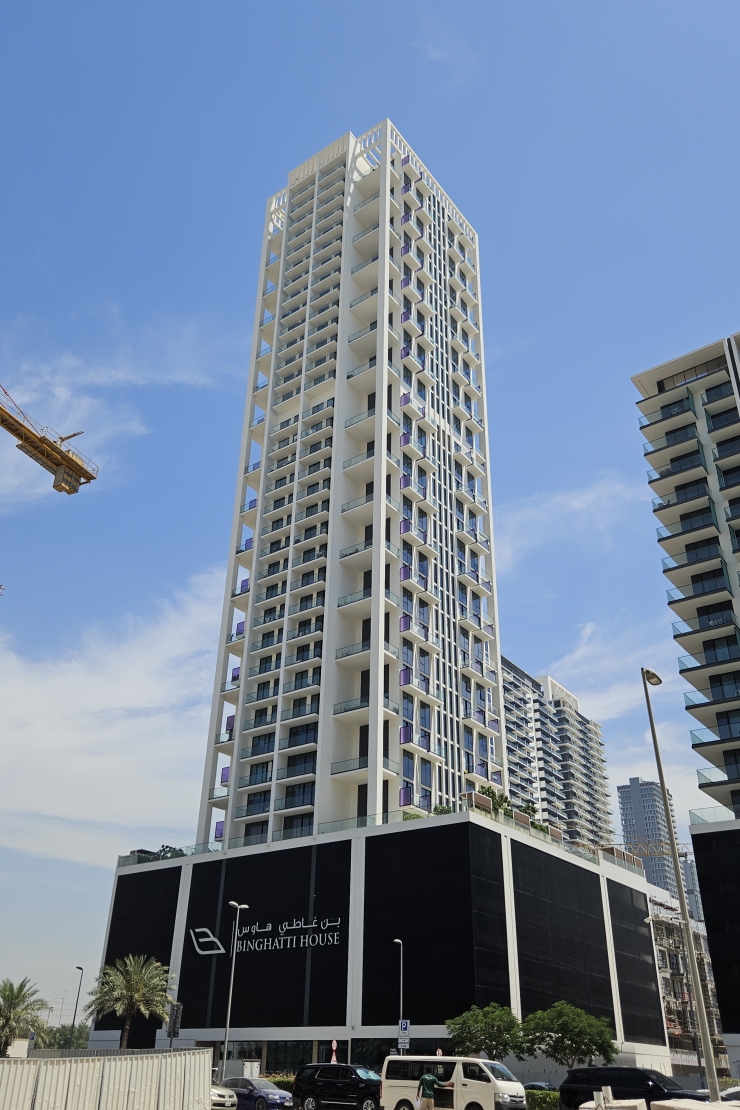
Binghatti House | 2BR Apartment | in JVC | HOT
Binghatti · JVC
1,605,000 AED
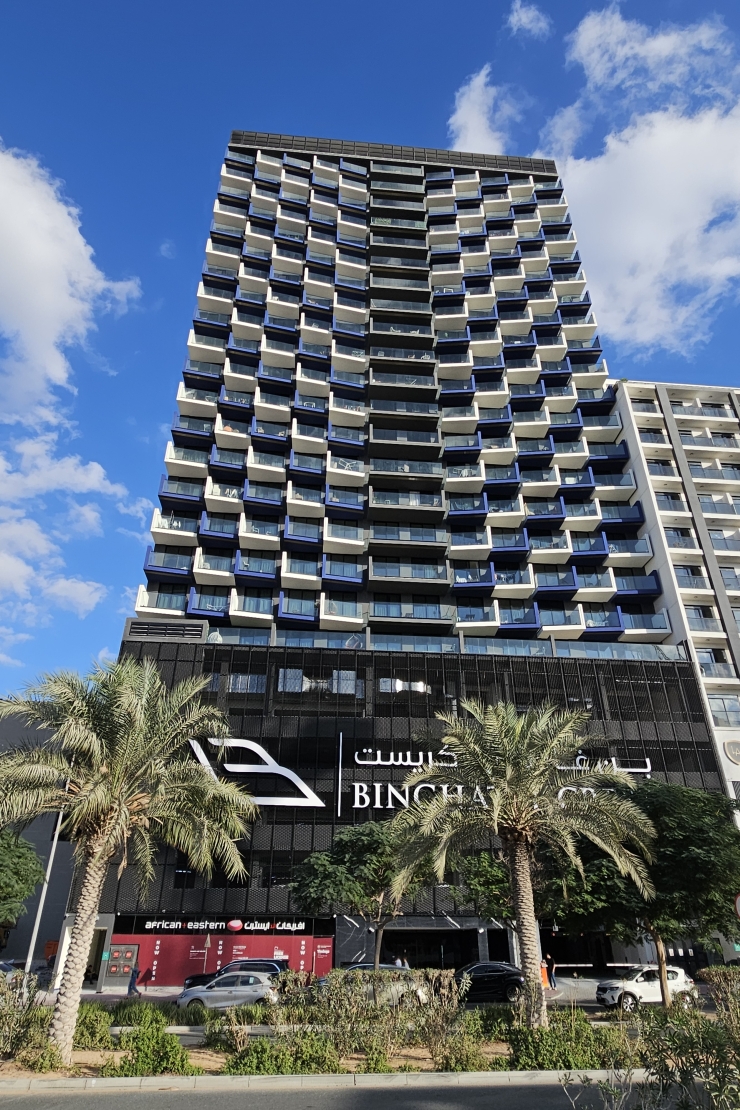
Binghatti Crest | 3BR Apartment | in JVC | HOT
Binghatti · JVC
1,800,000 AED (Furnished)
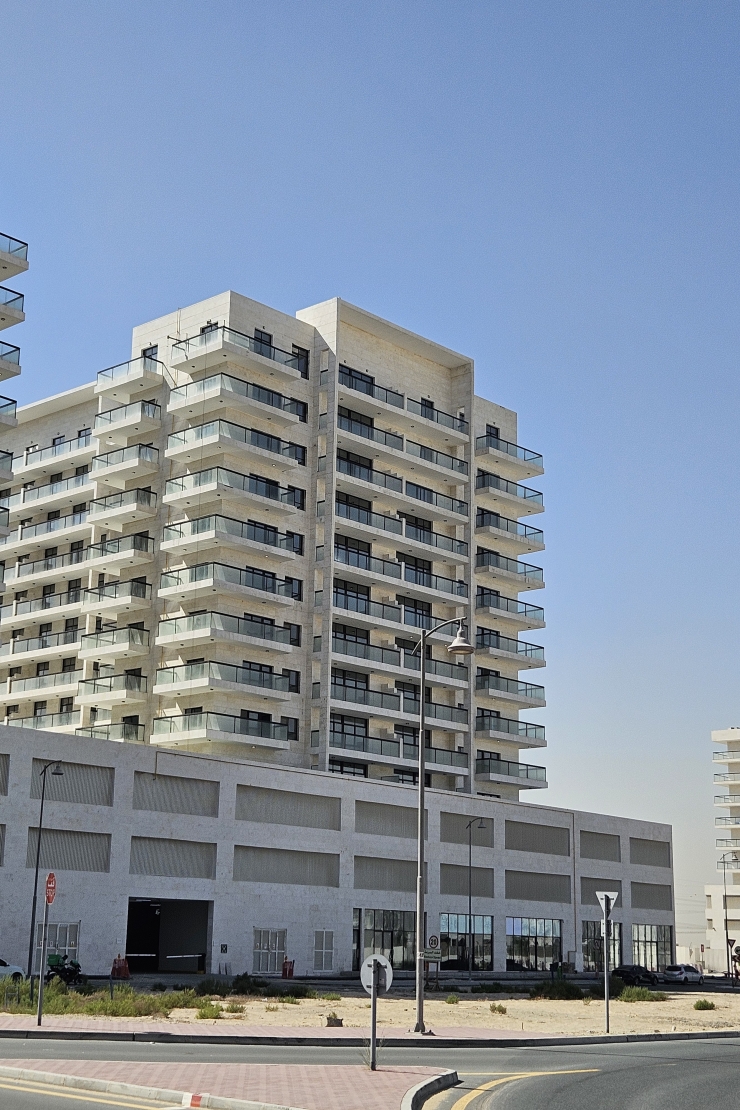
Equiti Home | 1BR Apartment | in Al Furjan | HOT
BNH Real Estate · Al Furjan
970,000 AED
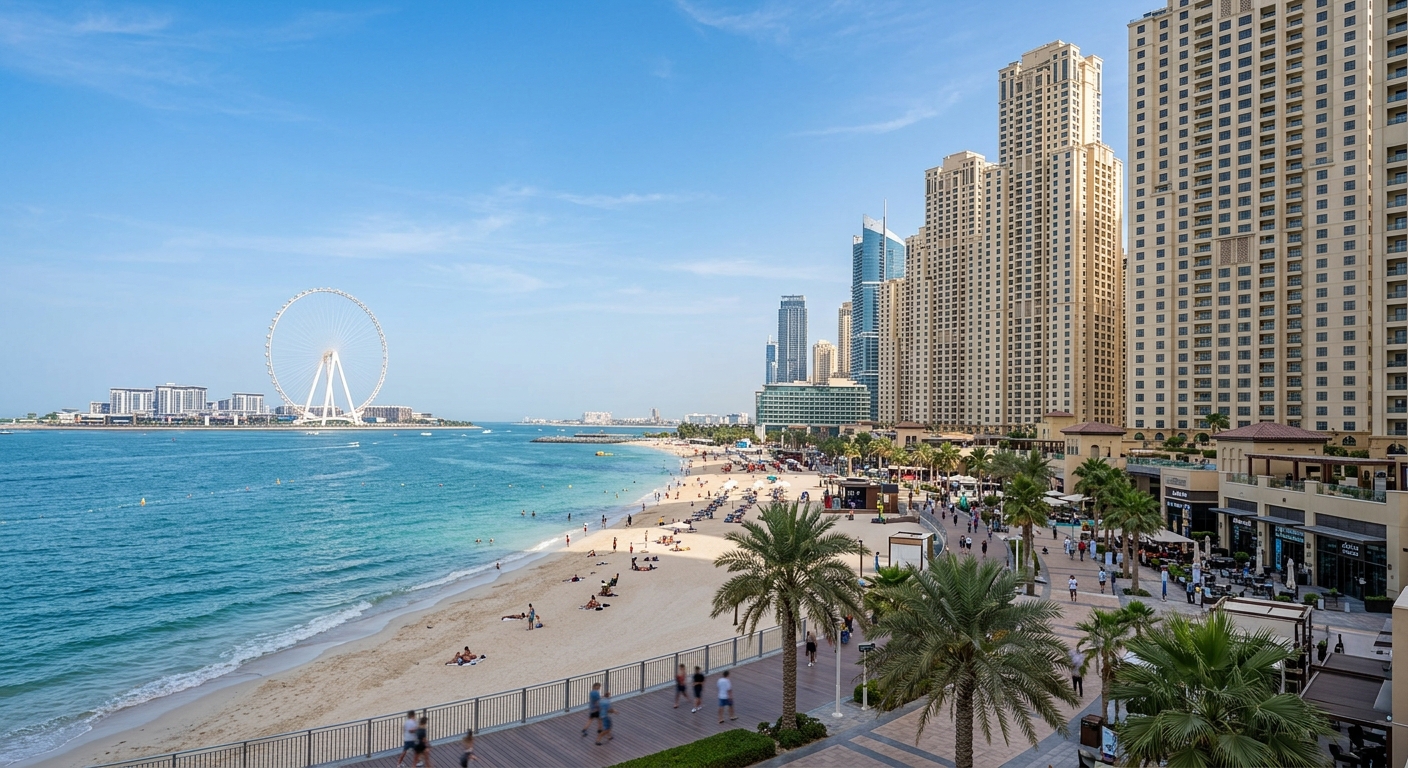
FIVE Luxe Hotel & Residence | 5BR + Maid Hotel Apartment | in JBR | HOT
FIVE Holdings · JBR
25,000,000 AED / 25,000,000 AED (Furnished)
Azizi Gardens | 1BR Apartment | in Meydan MBR | HOT
Azizi · Meydan MBR
930,000 AED
Match My Requirement
Tell us your budget and preferences — we'll match you with live Dubai & Abu Dhabi inventory within 24h.
Related Articles

Dubai Golden Visa 2026: Complete Application Guide
Everything about Dubai's Golden Visa: eligibility, benefits, application process, and required documents.
Dubai's Property Investor Visa Now Has No Minimum Value — and Why That Is Still Not the Golden Visa
Dubai's 2-year property investor residency has no minimum value for sole owners. The AED 400,000 joint rule, and when you still need the Golden Visa.
Dubai's Shared Housing Law: The Compliance Guide for Owners and Operators Before the 2027 Deadline
Dubai Law No. 4 of 2026 on shared housing: permits, the 5 sqm rule, 44 designated areas, fines to AED 1m, and the one-year compliance deadline in 2027.