

In short: On 2 June 2026 the Abu Dhabi Real Estate Centre (ADREC) cut the permitted annual rent increase from 5% to 0%. ADREC's press release, dated 3 June 2026, calls it a measure for "a temporary short period and until further notice", with no end date published. It covers residential, commercial and industrial property under ADREC's jurisdiction, and both renewals and new agreements reference the rent in the property's last registered Tawtheeq contract. As of 4 November 2026 no ADREC release has lifted, extended or amended it, and The National described the cap as in effect on 29 October 2026.
Key numbers
- 5% → 0%: the annual increase cap "was updated from 5% to 0% per annum" (ADREC press release, 3 June 2026).
- 2 June 2026: announcement date, confirmed in writing the next day (The National, 2 June 2026; Gulf News, 3 June 2026).
- +17% / +9%: new-lease prices for apartments and villas, H1 2026 (Modon–ADREC Abu Dhabi Real Estate Market Report, 18 August 2026).
- +16.8%: Abu Dhabi residential capital values year-on-year in Q3 2026 — apartments +24%, villas +10.2% (ValuStrat, via The National, 29 October 2026).
- +1.5% / +1.8%: apartment and villa rent growth, Q3 2026, averaging AED 121,500 and AED 258,000 a year — while volume fell 7% to 6,085 deals and value rose 32% to AED 21.5bn (ValuStrat and Savills, via The National).
- Dubai contrast: sale prices +1.9% year-on-year, average rents −2.6%, transactions down 29% to fewer than 37,000, value AED 88bn against nearly AED 154bn (CBRE UAE Market Review, Q2 2026).
What the measure actually says
ADREC's release is short. The annual increase percentage moved from 5% to 0%; it applies to residential, commercial and industrial properties across the emirate; renewals are processed at 0% for the duration; and renewals and new agreements reference the last registered Tawtheeq contract. ADREC says it will oversee compliance.
Two details change how you read it. There is no published decree or decision number — Baker McKenzie's 8 June 2026 alert states none was issued and that the measure was communicated by circular, social media and verbally, which means it can be adjusted the same way, quickly. And it is not retroactive: contracts renewed and registered before the circular stand as agreed (Khaleej Times, 5 June 2026).
Can a vacant unit be re-let at a free market rent?
Not where a prior registered contract exists. ADREC extends the Tawtheeq reference to new agreements, and Baker McKenzie reads it as a cap: on re-letting, the rent must align with the most recent registered contract for that unit. Khaleej Times advises tenants to ask for a copy before signing.
The gap is a unit with no prior registered contract — a first handover in a new building. Baker McKenzie notes its alert does not address it, and we found no official ADREC statement on the point. For anyone underwriting new stock that is the most important open question, and it belongs in the "still unclear" column, not in a model.
The ADGM carve-out
Communities under Abu Dhabi Global Market jurisdiction sit outside the cap. An ADREC representative told The National on 2 June 2026 that the freeze "does not include the ADGM jurisdiction as they are on a different legal framework and governance", naming Al Maryah Island and Reem Island. Baker McKenzie calls the carve-out informal and the position "fluid", and ADREC's written release does not mention ADGM — so treat it as real but undocumented, and confirm a plot's status before pricing it.
Dubai versus Abu Dhabi: two different philosophies
Dubai does not cap increases at a flat number — it indexes them. Under Decree No. 43 of 2013 the permitted increase depends on how far the rent sits below the official index average, and since January 2025 that benchmark has been the Dubai Land Department's Smart Rental Index, which assesses buildings individually.
| Abu Dhabi (ADREC) | Dubai (RERA / DLD) | |
|---|---|---|
| Mechanism | Flat emirate-wide cap on the annual increase | Indexed slabs tied to an official rent index |
| Permitted increase now | 0%, from 2 June 2026, until further notice | 0% if rent is within 10% of index; 5% if 11–20% below; 10% if 21–30%; 15% if 31–40%; 20% if more than 40% below (Decree No. 43 of 2013, Art. 1) |
| Benchmark | Rent in the last registered Tawtheeq contract | Smart Rental Index, building-level, from registered Ejari data |
| New / re-let unit | Referenced to the last registered Tawtheeq rent | Priced to market; the index governs later renewals |
| Notice to change terms | 2 months before expiry for residential; longer for commercial and industrial | 90 days before expiry (Law No. 26 of 2007, Art. 14, as amended by Law No. 33 of 2008) |
| Dispute forum | Rent Dispute Settlement Committee, Abu Dhabi Judicial Department | Rental Disputes Centre (Decree No. 26 of 2013) |
| Scope | Residential, commercial and industrial; ADGM excluded | Residential and commercial; DIFC has its own regime |
| Predictability for a landlord | Set administratively; can change without notice | Formula-driven; the landlord can model it |
The practical difference is not the number. A Dubai landlord can calculate next year's permitted increase from published inputs; an Abu Dhabi landlord cannot forecast anything beyond "zero, until told otherwise". Our Dubai rental market report 2026 shows how the indexed system plays out by community.
Eviction, notice and the dispute route in Abu Dhabi
The cap governs price, not possession. Abu Dhabi's framework sits in Law No. 20 of 2006 and its amendments, with the 5% cap itself reinstated by a 2016 Executive Council instrument. Law-firm commentary (Nour Attorneys) describes written notice of non-renewal or modification two months before expiry for residential premises and three months for commercial, industrial and professional premises, six months where the landlord takes the property for his own use, and eviction grounds including non-payment after 21 days (residential) or 30 days (commercial), unauthorised subletting and use contrary to the contract. Sources disagree on the residential period — MyBayut, updated 16 October 2026, cites both two months and sixty days. Disputes go to the Rent Dispute Settlement Committee under the Abu Dhabi Judicial Department, and a registered Tawtheeq contract is a precondition for filing.
What this does to yield underwriting
The measure does not bite where most people expect. A rent freeze costs a holder very little income in the first year; what it attacks is the exit, because exit value capitalises the forward rent. Three years of zero growth compounds into the terminal value, not the coupon.
A worked illustration — not a projection or a promise
Take a unit bought at AED 1,500,000, let at AED 90,000 gross (6.0%), with 25% of gross absorbed by service charges, management, vacancy and maintenance, so net income is AED 67,500 (4.5% net). Hold three years, exit at the same 6.0% gross yield, and compare two rent-growth assumptions:
| 5% annual growth | 0% annual growth | |
|---|---|---|
| Year 1 gross rent | 90,000 | 90,000 |
| Year 2 gross rent | 94,500 | 90,000 |
| Year 3 gross rent | 99,225 | 90,000 |
| Net income collected over 3 years | 212,794 | 202,500 |
| Year 4 forward gross rent | 104,186 | 90,000 |
| Exit value at 6.0% gross | 1,736,438 | 1,500,000 |
| Capital gain | 236,438 | 0 |
| Total 3-year return on AED 1.5m | 29.9% | 13.5% |
The income difference is AED 10,294 over three years. The exit difference is AED 236,438 — roughly twenty-three times larger. That ratio is the whole story of this measure for an investor. Illustration only: the figures are assumptions, not a forecast, and not a representation of what any property will achieve.
Three qualifications. Abu Dhabi capital values rose 16.8% year-on-year in Q3 2026 regardless, so buyers are currently paid by yield compression rather than rent growth — a less durable engine. An exit at a tighter yield can offset flat rent entirely; a wider one makes the picture worse. And the measure is temporary by its own wording, so a three-year model on 0% throughout is a stress case, not a base case: run both columns and ask whether the deal still works on the right-hand one. Note the direction of travel — CBRE put Abu Dhabi residential rent growth at 3.6% annually in Q2 2026 against ValuStrat's +1.5% for apartments by Q3, so yields are compressing from the numerator, not the denominator (see our Abu Dhabi real estate market and investment guide).
What this means for you
Residential landlords. In-place income is protected and retention improves — nobody has a reason to move, so turnover costs and voids fall. But reversionary upside is suspended: re-check any sale timed on a rental uplift you can no longer deliver.
Commercial and industrial owners. You are in scope — a point many warehouse and labour-accommodation owners missed, because the headlines read as a residential story. CBRE put Abu Dhabi office rents up nearly 16% at about 96% occupancy in Q2 2026, so the cap removes more upside here than in villas.
Buyers. Ask for the last registered Tawtheeq contract before you agree a price. A vendor's quoted "market rent" is not what you may legally charge if the registered figure is lower: underwrite the gap, or walk. Off-plan buyers own the unresolved first-lease question above, which sets first-cycle income — our off-plan Abu Dhabi buyer guide covers the rest of the handover checklist.
Tenants and business occupiers. Your renewal should process at 0%, and a new lease on a previously let unit should reference the last registered rent. If a landlord demands more, report it to ADREC.
Dubai-based investors comparing the two. You are comparing a formula with a discretion. Dubai's slabs are modellable; Abu Dhabi's cap is an administrative setting that changed overnight and can change back. Price that as a risk premium, not a preference — and rental yield is never guaranteed in either emirate.
The honest reading of the risk
The real downside is not the 0%. It is that the rule arrived without a published instrument number and without an end date, so what you cannot underwrite is the regime, not the rent. An asset whose permitted income is set administratively, at a figure that can move between zero and five per cent on a circular, carries a different risk from one whose income is set by contract and index. A quieter second risk: capping in-place rent while new-lease pricing runs at +17% for apartments (ADREC, H1 2026) widens the gap between registered and market rent, and such gaps resolve either by the cap being lifted or by pressure on the benchmark — neither predictable from here.
This does not suit an investor who needs contractual rent escalation to service debt, or whose model only works if rents rise. It does suit a long-hold owner who wants occupancy stability and is paid by capital appreciation rather than by the rent roll. Which description fits you is a question about your balance sheet, not the market — and it is what we work through in a diagnostic on whether Abu Dhabi is the right allocation for you in 2026.
What is still unclear
- No instrument number. None published; we could not locate one on ADREC's site, and Baker McKenzie states none was issued.
- No end date. ADREC says "until further notice", with no published review schedule, criteria or trigger for lifting.
- First lease in a new building. Whether a unit with no prior Tawtheeq contract can be priced freely is not addressed in any official source we found.
- The ADGM carve-out is undocumented. Stated verbally to media, called informal and fluid by Baker McKenzie, and absent from ADREC's written release.
- Penalties and notice periods. No penalty schedule has been published for charging above the registered rent, and sources give inconsistent residential notice periods (two months versus sixty days).
- The rationale figures. The 15% emirate-wide / 23% investment-zone new-lease increases cited as the rationale appear only in A&O Shearman's 30 September 2026 note; ADREC's own H1 2026 report gives +17% for apartments and +9% for villas, which is the figure used above.
FAQ
Is the Abu Dhabi rent freeze still in force in November 2026? Yes, on the evidence available. ADREC's 3 June 2026 press release remains its latest published statement on the cap, nothing on its media centre since has amended it, and The National referred to it as in effect on 29 October 2026. Because it runs "until further notice", confirm the position with ADREC before any renewal.
Does the 0% cap apply to warehouses and offices? Yes. ADREC's release names residential, commercial and industrial properties across the emirate, with renewals processed at 0% against the last registered Tawtheeq contract.
Can a landlord re-let a vacant apartment at a higher rent? Not where a prior registered contract exists. ADREC extends the Tawtheeq reference to new agreements, and Baker McKenzie reads this as a cap on re-letting.
Which areas are exempt? Communities under ADGM jurisdiction, which an ADREC representative identified to The National as including Al Maryah Island and Reem Island. The carve-out has not appeared in a published instrument, so verify the address.
How is this different from Dubai? Dubai caps increases on a sliding scale tied to the Smart Rental Index — 0% to 20%, depending on how far below the index your rent sits — under Decree No. 43 of 2013. Abu Dhabi applies a flat 0% across ADREC's jurisdiction.
Does the freeze reduce property values in Abu Dhabi? Not so far. ValuStrat recorded overall residential values up 16.8% year-on-year in Q3 2026, four months into the measure. The pressure shows up in rent growth instead, at +1.5% for apartments.
Verify before you act
Rental rules in the UAE change by circular, sometimes without a published number and sometimes overnight — exactly what happened here. Before you renew a lease, agree a price, serve a notice or sign off a model, confirm the permitted increase, the notice period for your lease type and the status of any ADGM carve-out with ADREC at adrec.gov.ae, the Rent Dispute Settlement Committee, or qualified counsel. Nothing here is legal advice.
If you hold or are buying Abu Dhabi stock and want to know what a zero-growth rent assumption does to your position — debt service, exit window, your blend across the two emirates — that is a strategic consultation, not a transaction. Book a financial diagnostic and we will work through your own numbers first.
Sources
- ADREC — "Temporary update to Annual Rental Cap Increase in Abu Dhabi", press release, 3 June 2026 — https://adrec.gov.ae/en/news/press-release-26---rental-freeze-update (accessed 2026-11-04)
- ADREC Media Centre (checked for any later amendment; latest items 12 Oct 2026 and 2 Oct 2026, neither on rent caps; H1 2026 market report 18 Aug 2026 reports new-lease prices +17% apartments, +9% villas) — https://adrec.gov.ae/en/media (accessed 2026-11-04)
- The National — "Abu Dhabi freezes rents for residential, commercial and industrial properties", 2 June 2026 (updated 3 June 2026) — https://www.thenationalnews.com/news/uae/2026/06/02/abu-dhabi-freezes-rents-for-residential-commercial-and-industrial-properties/ (accessed 2026-11-04)
- The National — "Abu Dhabi apartment prices rise 24 per cent in third quarter" (ValuStrat and Savills Q3 2026 data; cap described as still in effect), 29 October 2026 — https://www.thenationalnews.com/business/property/2026/10/29/abu-dhabi-apartment-prices-rise-24-per-cent-in-third-quarter/ (accessed 2026-11-04)
- Gulf News — "Abu Dhabi confirms freeze on 5% rent increases for residential, commercial and industrial properties", 3 June 2026 — https://gulfnews.com/business/property/abu-dhabi-confirms-freeze-on-5-rent-increases-on-these-properties-for-now-1.500562169 (accessed 2026-11-04)
- Khaleej Times — "Abu Dhabi rent freeze: What the decision means for tenants, landlords", 5 June 2026 — https://www.khaleejtimes.com/uae/abu-dhabi-rent-freeze-guide (accessed 2026-11-04)
- Baker McKenzie — "United Arab Emirates: Abu Dhabi Freezes Rental Increases", client alert, 8 June 2026 — https://www.bakermckenzie.com/en/insight/publications/2026/06/united-arab-emirates-abu-dhabi-freezes-rental-increases (accessed 2026-11-04)
- A&O Shearman (Priestley, Otu, Iskandar) — "Abu Dhabi rental pricing reform: the 0% rent cap is temporary, but its impact is immediate", 30 September 2026 — https://www.mondaq.com/landlord-tenant-leases/1849454/abu-dhabi-rental-pricing-reform-the-0-rent-cap-is-temporary-but-its-impact-is-immediate (accessed 2026-11-04)
- Arabian Business — "Dubai office rents rise 13%, Abu Dhabi occupancy hits 96% as UAE property remains resilient: CBRE", 29 July 2026 — https://www.arabianbusiness.com/real-estate/dubai-office-rents-rise-13-abu-dhabi-occupancy-hits-96-as-uae-property-remains-resilient-cbre (accessed 2026-11-04)
- Gulf News — "Dubai rents fall 6.2% in Q2 2026 as home prices stay above 2025 levels, CBRE report" (clarifies −6.2% quarter-on-quarter vs −2.6% year-on-year), 29 July 2026 — https://gulfnews.com/business/property/dubai-rents-ease-62-while-home-prices-stay-above-2025-levels-1.500623468 (accessed 2026-11-04)
- CBRE — UAE Real Estate Market Review, Q2 2026 — https://www.cbre.ae/insights/figures/uae-real-estate-market-review-q2-2026 (accessed 2026-11-04)
- Leaders Advocates via Legal 500 — "Can my landlord increase rent every year in Dubai? What the law says" (Decree No. 43 of 2013 slabs; Law No. 26 of 2007 Art. 14 as amended by Law No. 33 of 2008; Smart Rental Index; Rental Disputes Centre), 20 July 2026 — https://www.legal500.com/intelligence/united-arab-emirates/real-estate-and-construction/can-my-landlord-increase-rent-every-year-in-dubai-what-the-law-says (accessed 2026-11-04)
- Nour Attorneys — "Abu Dhabi Rental Law: Tenancy Regulations and Dispute Framework" (notice periods, eviction grounds, Rent Dispute Settlement Committee) — https://www.nourattorneys.com/articles/abu-dhabi-rental-law-tenancy-regulations-framework (accessed 2026-11-04)
- MyBayut (Bayut) — "Tenant Rights According to Tenancy Law in Abu Dhabi", updated 16 October 2026 (cited for the 2016 reinstatement of the 5% cap and the inconsistent notice periods noted in the article) — https://www.bayut.com/mybayut/tenant-rights-according-property-law-abu-dhabi/ (accessed 2026-11-04)
- Arabian Business — "Abu Dhabi apartment values rise 24% as Al Reef records 36.6% increase" (ValuStrat Q3 2026, second source for the area figures) — https://www.arabianbusiness.com/real-estate/abu-dhabi-apartment-values-rise (accessed 2026-11-04)
Sources & Official References
- governmentDubai Land Department (DLD)
- governmentUAE Government Portal — Property & Housing
- developerAldar Properties (Official)
Related Listings
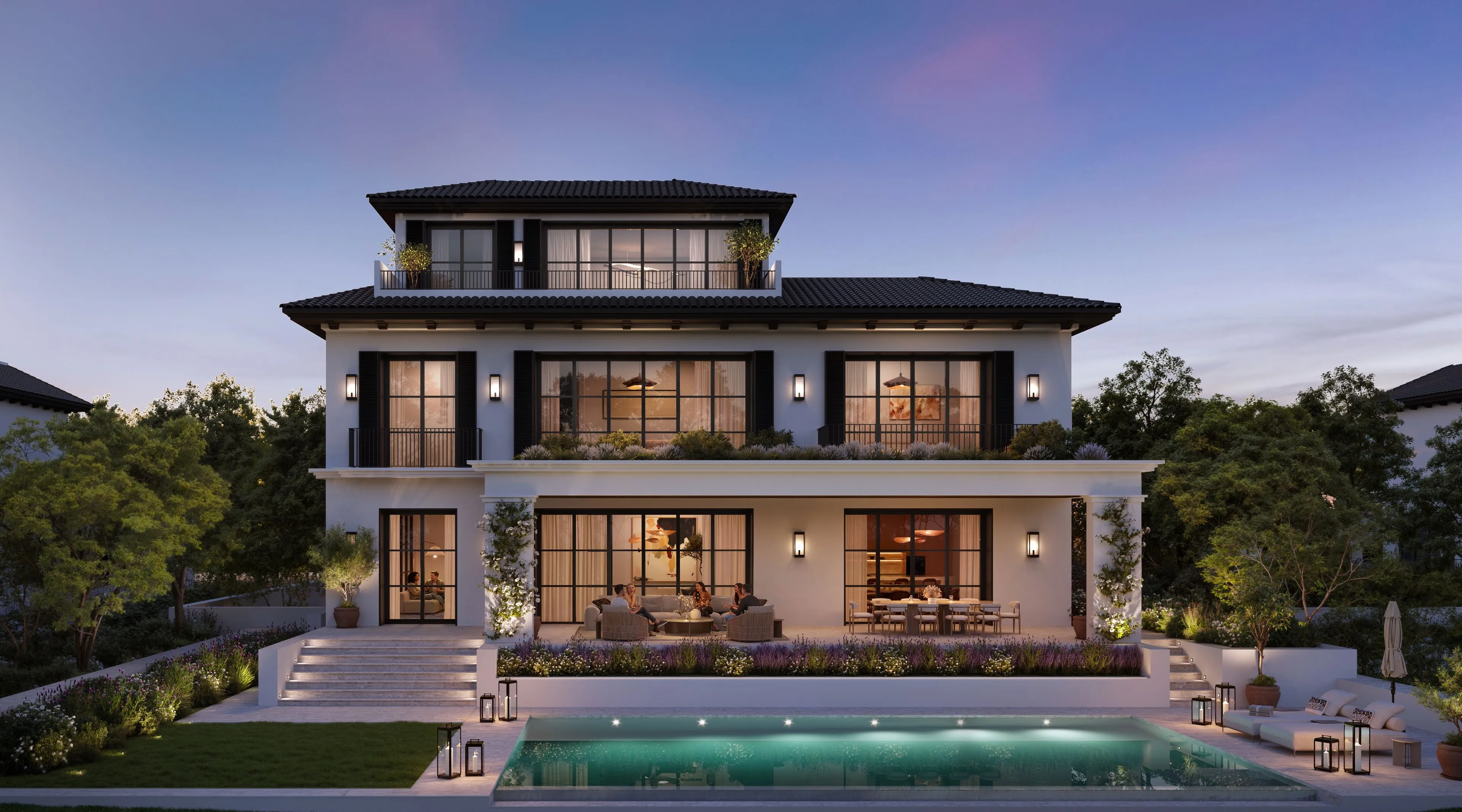
Hudayriyat Golf Estates | 6BR Villa | Hudayriyat Island
Modon Properties · Hudayriyat Island, Abu Dhabi
AED 26,608,000
Hudayriyat Golf Estates | 6BR Villa | Hudayriyat Island
Modon Properties · Hudayriyat Island, Abu Dhabi
AED 26,933,000
Hudayriyat Golf Estates | 6BR Villa | Hudayriyat Island
Modon Properties · Hudayriyat Island, Abu Dhabi
AED 26,608,000
Hudayriyat Golf Estates | 6BR Villa | Hudayriyat Island
Modon Properties · Hudayriyat Island, Abu Dhabi
AED 26,933,000
Hudayriyat Golf Estates | 6BR Villa | Hudayriyat Island
Modon Properties · Hudayriyat Island, Abu Dhabi
AED 26,608,000
Hudayriyat Golf Estates | 6BR Villa | Hudayriyat Island
Modon Properties · Hudayriyat Island, Abu Dhabi
AED 26,933,000
Match My Requirement
Tell us your budget and preferences — we'll match you with live Dubai & Abu Dhabi inventory within 24h.
Related Articles

How to Choose the Right Commercial Location for Your Business
A practical guide for business owners and investors on selecting the right commercial location: accessibility, target audience, competition, cost, infrastructure, and the common mistakes to avoid.

Buying Off the Plan in Dubai as a First-Time Buyer: The Guide Nobody Puts in the Brochure
First-time off-plan buyers are the segment most likely to overpay. Seven specific mistakes account for most of those losses. Name them upfront, avoid them upfront, and the process becomes navigable.

Off-Plan Investment Strategy in Dubai for 2026: Which Trade Fits Which Investor
Yield-first, capital appreciation, and end-user strategies each need different communities, developers and unit types. Choose one and execute the diligence. Do not run three strategies with one unit.