

Why most rental-yield numbers you see are incomplete
Almost every "X% rental yield" figure circulating for any Dubai community is a gross yield calculated from an asking rent and an asking price — before acquisition costs, service charges, financing costs, vacancy, and exit costs are deducted. That number isn't necessarily wrong, but it isn't what you actually earn. This guide walks through the full calculation so you can build your own honest number for a specific DAMAC Lagoons unit, rather than repeat someone else's marketing figure.
Important: every figure in the worked example below is a clearly labelled hypothetical number used only to illustrate the methodology. It is not a DAMAC Lagoons market figure and should not be quoted as one. For actual expected rent, price, and costs for any specific DAMAC Lagoons unit, use current comparable transactions and your own listing data.
Gross rental yield — the formula
Gross Rental Yield (%) = (Annual Rental Income ÷ Property Purchase Price) × 100
This is the headline figure most portals quote. It tells you almost nothing about your actual return because it ignores every cost of ownership.
Net rental yield — the formula
Net Rental Yield (%) = [(Annual Rental Income − Annual Operating Costs) ÷ Total Acquisition Cost] × 100
Where annual operating costs include service charges, maintenance, property management fees (if used), insurance, and a vacancy allowance; and total acquisition cost includes the purchase price plus every cost of purchase (below).
Acquisition costs to include
- Dubai Land Department transfer fee (currently 4% of purchase price — confirm the current rate directly with DLD before quoting it, as government fees can be revised)
- Real estate agency commission (typically negotiated, often around 2% — confirm the actual agreed rate)
- Mortgage arrangement/processing fee, if financing
- Property valuation fee, if financing
- Developer NOC fee, where applicable
- Agent/registration fees
Data not independently verified: the exact current percentages for fees other than the widely published 4% DLD fee. Confirm each fee with the relevant party or your lawyer before including it in a client-facing calculation.
Service charges
Service charges in amenity-rich, themed clusters like those in DAMAC Lagoons fund the maintenance of shared facilities (clubhouse, lagoons, cluster-specific amenities). These are calculated per sq. ft. annually and vary by cluster — always get the current service charge for the specific unit and cluster rather than assuming an average across the whole masterplan.
Financing costs
If using a mortgage, your net-return calculation should deduct annual interest and principal costs (or, to show pure cash flow, interest only) from rental income before comparing against your actual cash invested (down payment plus fees) — not the full property price. This "cash-on-cash return" is usually the more relevant figure for a leveraged investor than an unleveraged net yield.
Cash-on-Cash Return (%) = [(Annual Rental Income − Annual Operating Costs − Annual Mortgage Payments) ÷ Total Cash Invested] × 100
Vacancy
Even in a strong rental market, build in a realistic vacancy allowance between tenancies — a conservative planning assumption for annual re-letting periods and turnover gaps, adjusted by your actual leasing experience in the specific cluster, is better than assuming 100% occupancy every year. This is particularly relevant for newer DAMAC Lagoons clusters where rental comparables are still thin.
Maintenance
Separate from service charges (which cover shared amenities), budget separately for maintenance of the unit itself — AC servicing, appliance repairs, garden upkeep for villas — typically as an annual allowance rather than an unplanned expense.
Exit costs
When you eventually sell, budget for: DLD fees (typically paid by the buyer, but negotiable), agency commission on the sale side, any remaining developer NOC fees, and early-settlement fees on financing if applicable.
Capital growth
Capital growth is the most speculative input in any Dubai property model — it depends on future market conditions that cannot be reliably predicted. Never use an assumed growth percentage without clearly labelling it as an assumption, and always show at least two scenarios (flat and a modest assumed growth) rather than a single optimistic figure.
Worked example (hypothetical numbers only — not a market claim)
For illustration only:
| Input | Hypothetical Value | |---|---| | Purchase price | AED 2,800,000 (illustrative only) | | Acquisition costs (4% DLD + agency + fees, illustrative) | AED 145,000 | | Total acquisition cost | AED 2,945,000 | | Assumed annual rent (illustrative only) | AED 165,000 | | Assumed annual service charges + maintenance (illustrative) | AED 22,000 | | Assumed vacancy allowance (illustrative, roughly one month) | AED 13,750 |
- Gross yield: 165,000 ÷ 2,800,000 = 5.9% (hypothetical)
- Net yield: (165,000 − 22,000 − 13,750) ÷ 2,945,000 = 4.4% (hypothetical)
Note the gap between the casually quoted gross figure (5.9%) and the more honest net figure (4.4%) — that gap is the entire reason this article exists. Replace every assumed input with current documented figures for the specific unit before using this for an actual decision.
Capital growth — how to think about it, not calculate it
Since future growth cannot be reliably predicted, the more useful exercise for an investor is scenario-based: what is your return if the property holds flat value over 5 years (rental yield only), and separately, what does a modest or strong growth scenario add — always presented as a clearly labelled "what if" scenario, not a forecast.
Frequently Asked Questions
What is a good rental yield in Dubai? "Good" depends on your risk tolerance, financing, and objective — there's no universal benchmark that applies to every buyer or every community. Compare your net yield (not gross) against your required return and other available options.
Should I use gross or net yield to evaluate a DAMAC Lagoons property? Net yield, or better, cash-on-cash return if financing, because both reflect your actual return after real costs.
Can you tell me the current rental yield for DAMAC Lagoons? Data not independently verified at the masterplan-wide level — yield depends heavily on the specific cluster, unit, and current comparable rents. Request a calculation for the specific unit you're considering.
Ready to Take the Next Step?
Request a DAMAC Lagoons investment analysis based on your budget and investment objective.
Contact Muhalab Adam for a free, no-obligation consultation tailored to your budget and goals.
Sources & Official References
- governmentDubai Land Department (DLD)
- governmentUAE Government Portal — Property & Housing
Related Listings
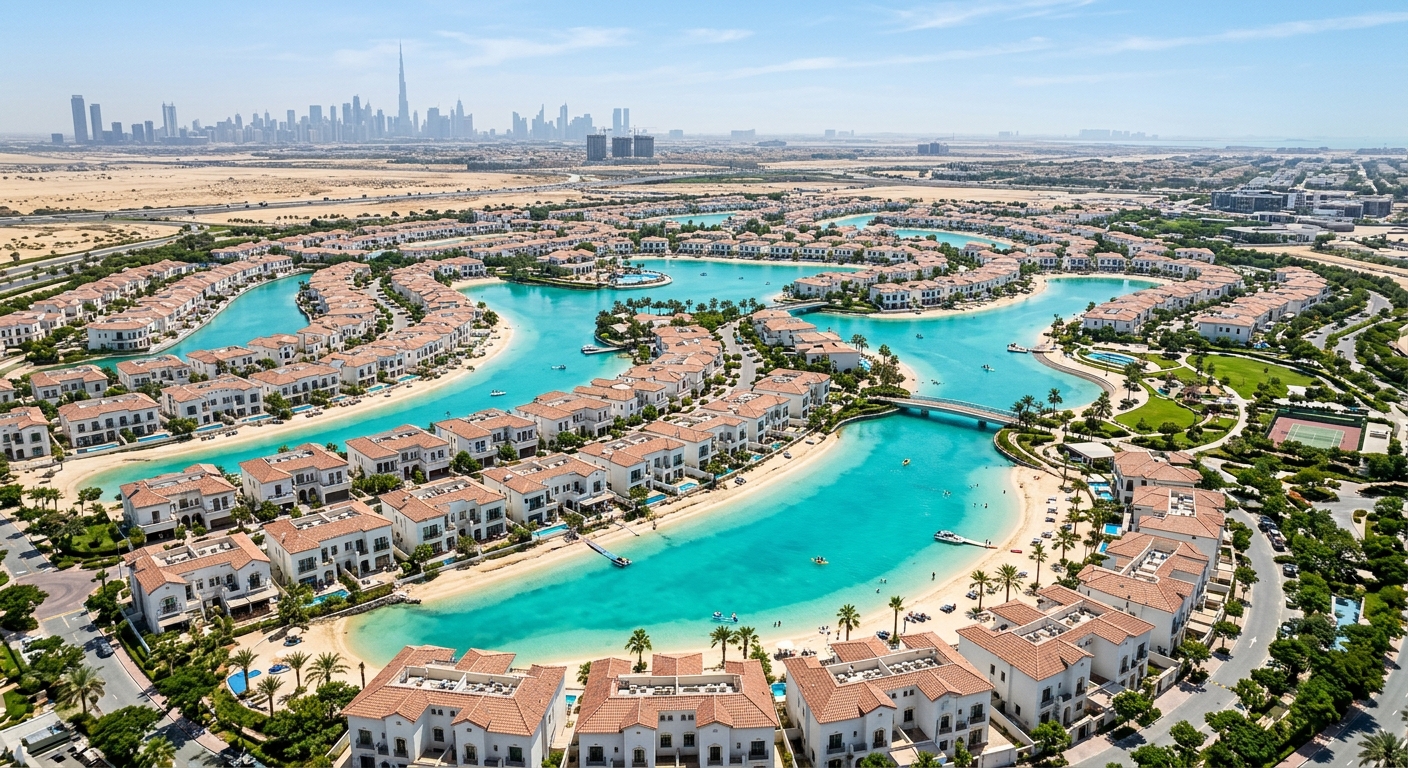
Santorini 1 | 4BR Townhouse | in DAMAC Lagoons | HOT
DAMAC · DAMAC Lagoons
3,950,000 AED (Furnished)
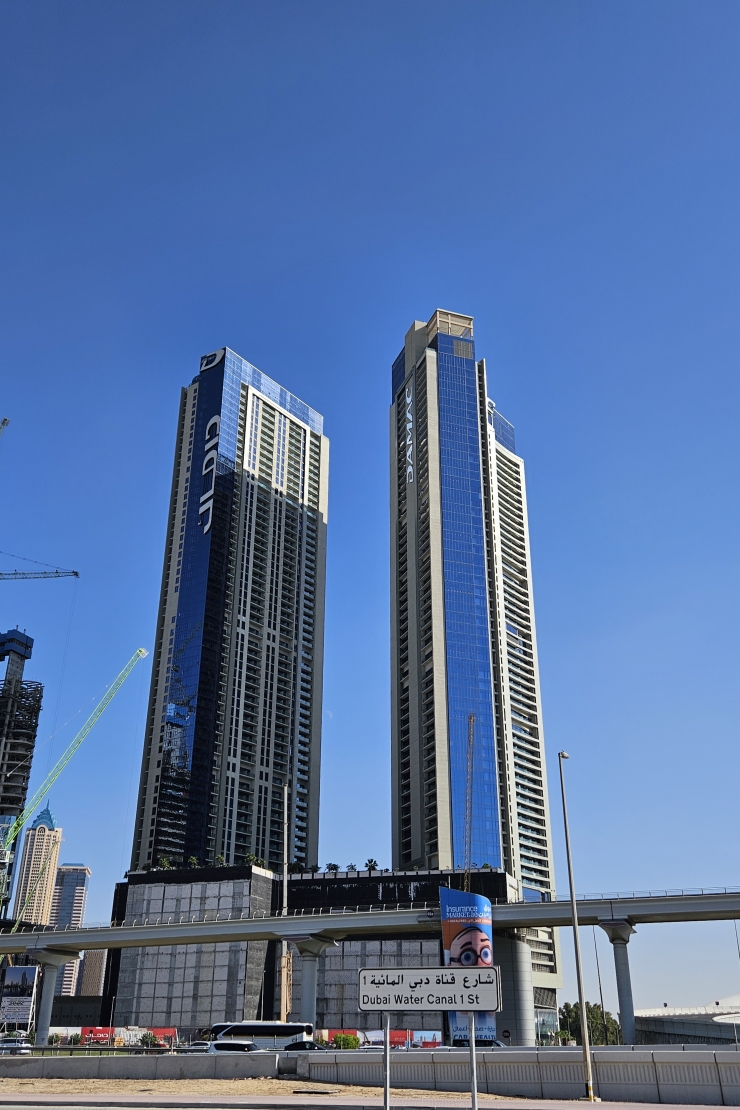
AYKON City 2 – Tower C | 2BR Apartment | in Business Bay
DAMAC · Business Bay
1,730,000 AED / 1,760,000 AED (Furnished)
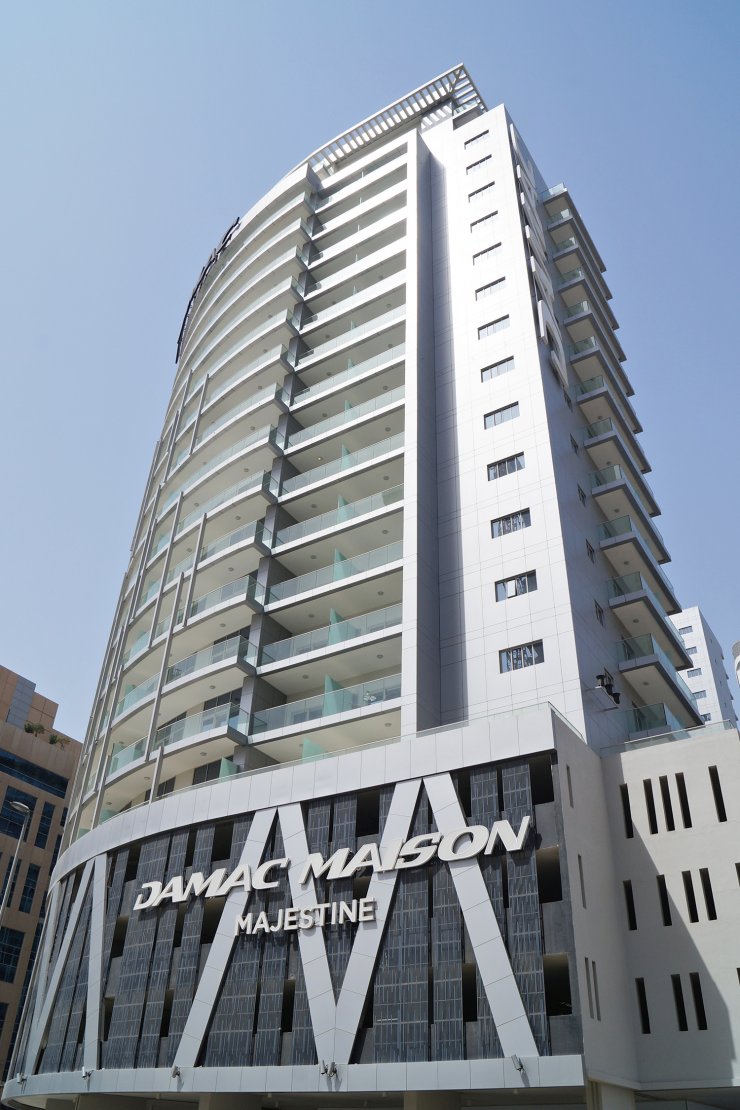
DAMAC Majestine | 3BR Apartment | in Business Bay
DAMAC · Business Bay
2,425,000 AED / 2,455,000 AED (Furnished)
Related Articles
Off-Plan Property Investment in Dubai: The Real Numbers Before You Commit
Off-plan property investment in Dubai — real ROI math, launch-phase entry, assignment strategy, and the risks nobody puts in the brochure.
Is DAMAC Lagoons a Good Investment? Full Analysis
A framework for evaluating DAMAC Lagoons as an investment — demand, supply, developer, liquidity, risk, and how to decide if it fits your strategy.
DAMAC Lagoons Dubai: Complete Guide to Living and Investing
An investor-level guide to DAMAC Lagoons — location, clusters, property types, risks, rental and resale considerations, and how to evaluate a unit.