

QUICK ANSWER
Dubai's short-term rental market now carries roughly 19,000–20,000 active listings at about 69% occupancy and an average daily rate near USD 180 (about AED 660), with average revenue per listing around USD 37,200 a year before any host expenses (AirDNA, trailing twelve months to September 2026). A DET holiday home permit costs AED 370 for a one-bedroom and up to AED 1,270 for four bedrooms or more, plus Tourism Dirham of AED 10–15 per occupied bedroom per night collected from the guest. The decision is not "short-term earns more". It is whether your specific unit can hold a high enough nightly rate and occupancy to clear a cost base roughly four to five times heavier than an annual lease.
In short: short-term letting converts a passive asset into an operating business. Run the break-even before you furnish anything.
What the Dubai market actually looks like in 2026
Three data points frame the decision:
- Supply is climbing fast. AirDNA counts 20,377 active Dubai listings in the twelve months to September 2026. Coverage in September 2026 citing AirDNA and STR Global put the market near 19,000 units with revenue up 172%.
- Occupancy is healthy but not full. 69% is a strong number by global city standards. It is not 90%, and it is an average across prime waterfront stock and mid-market inland apartments.
- The average daily rate is pulled upward by the top end. A city-wide ADR near AED 660 includes Palm Jumeirah villas and branded beachfront units. A one-bedroom in a mid-market inland community does not earn that rate.
The second and third points are where most owners' projections go wrong. They apply a city-wide ADR to a unit that will never achieve it, then multiply by 365.
The cost stack nobody shows you
An annual lease has three recurring costs: service charge, letting commission, and occasional maintenance. A holiday home has all of those plus a business attached to them.
Government and compliance
| Item | 2026 position |
|---|---|
| DET holiday home permit (1 bedroom) | AED 370 |
| 2 bedrooms | AED 670 |
| 3 bedrooms | AED 970 |
| 4+ bedrooms | AED 1,270 (cap) |
| Permit period | 1 to 12 months, renewable at the same fee |
| Tourism Dirham | AED 10 per occupied bedroom per night (Standard), AED 15 (Deluxe), capped at 30 consecutive nights, filed and remitted monthly |
| VAT | 5% on the nightly rate; registration mandatory above AED 375,000 taxable turnover, voluntary from AED 187,500 |
| Operating without a permit | Fines reported up to AED 50,000 |
| More than two units | Operator licence and office space required |
If you are a tenant subletting rather than an owner, you also need the landlord's NOC, and building or community NOC where required. Each apartment or villa needs its own permit — there is no portfolio permit.
Operating costs
These are the ones that decide the outcome:
- Management: 15–20% of gross revenue if you use an operator. Self-managing replaces this with your own time — guest messaging, check-ins, cleaning scheduling, pricing.
- Utilities: AED 10,000–15,000 a year. In short-term letting, DEWA, chiller, internet and TV sit with the owner, not the tenant. This cost simply does not exist on an annual lease.
- Furniture and appliances. A decent one-bedroom fit-out of AED 50,000–70,000 is not a one-off: it depreciates and gets replaced. Amortised over four years, that is AED 12,500–17,500 a year.
- Linen, consumables, replacements: AED 3,000–5,000.
- Platform and payment fees: around 3% of gross.
- Maintenance: higher than an annual tenancy, because the unit turns over 100+ times a year instead of once.
- Service charge: unchanged. It is the same number either way — see our breakdown of Dubai service charges and net yield.
The break-even calculation
Take the JVC one-bedroom used in our service-charge analysis: 750 sq ft, bought at AED 1,064,250, letting annually for about AED 75,560 gross and netting roughly AED 53,235 after service charge, management, a one-month vacancy allowance and maintenance.
Now model the same unit as a holiday home:
| Line | Assumption | AED |
|---|---|---|
| Management | 18% of gross | −18% of gross |
| Platform & payment fees | 3% of gross | −3% of gross |
| Utilities (DEWA, chiller, internet) | fixed | −12,000 |
| Furniture amortisation | 60,000 over 4 years | −15,000 |
| Linen, consumables, replacements | fixed | −4,000 |
| Maintenance | fixed | −3,000 |
| Insurance | fixed | −1,500 |
| DET permit | 1 bedroom | −370 |
| Service charge | 13/sq ft | −9,750 |
So: Net = 0.79 × Gross − AED 45,620.
To match the annual lease's AED 53,235 net, gross revenue must reach AED 125,100. Translated into nightly rates:
| Occupancy | Required ADR to match an annual lease |
|---|---|
| 60% | AED 571 |
| 69% (market average) | AED 497 |
| 75% | AED 457 |
| 85% | AED 403 |
That is the number to test against reality. If comparable one-bedrooms in your building are clearing AED 450–500 a night at 70% occupancy, short-term letting wins — but by a thinner margin than the gross headline suggests, and it wins while carrying more risk and more work. If they are clearing AED 350, the annual lease wins outright and you have saved yourself a business.
Run the same formula with your own numbers. The structure is what matters: roughly 21% of gross disappears into variable costs before a single fixed cost is paid, and the fixed costs are about AED 45,000 a year on a mid-market one-bedroom.
Where short-term letting genuinely wins
The math flips decisively in four situations:
- Location with a non-negotiable premium. Beachfront, Marina, Downtown views, Palm — stock where the nightly rate is set by tourism demand rather than by residential rent comparables.
- Layouts that price above their rent band. Studios and one-bedrooms in high-footfall locations often achieve a nightly rate close to a two-bedroom's while costing far less to buy and furnish.
- Owners who need flexibility. If you use the unit personally several weeks a year, an annual lease is not available to you at all. The comparison is then short-term versus empty.
- Event and seasonal capture. Dubai's season concentrates revenue. An operator who prices dynamically through the peak months captures a disproportionate share of annual revenue in roughly five months.
Where it loses
- Mid-market inland communities with heavy new supply. Your competition is thousands of near-identical units, and the only lever left is price.
- Buildings where the owners' association restricts short-term letting. Check before you buy, not after.
- Leveraged purchases. A mortgage payment is fixed; short-term revenue is not. The months that underperform still carry the instalment.
- Owners who want passive income. This is not passive. Even with an operator, you are running a hospitality micro-business with a 15–20% revenue share paid to someone else.
And one market-level caution: revenue up 172% with listings climbing toward 20,000 is a supply response in motion. Supply growth of that order eventually lands on occupancy, on ADR, or on both. Underwrite today's deal on conservative occupancy, not on last year's growth rate.
Checklist before you convert a unit
- Pull actual ADR and occupancy for comparable units in your own building, not the city average.
- Confirm the owners' association and your lease permit short-term use.
- Price the fit-out properly and amortise it over four years in your model.
- Add DEWA, chiller and internet as owner costs — they move from tenant to you.
- Decide operator versus self-management before modelling, because 18% of gross changes the answer.
- Register for VAT if your taxable turnover will exceed AED 375,000, and set up Tourism Dirham filing from the first month.
- Model at 60% occupancy, not 69%. If it still beats the annual lease, you have a real margin.
Bottom line
Short-term letting in Dubai is a legitimate, licensed, and often superior strategy — in the right building, at the right nightly rate, for an owner who accepts they are starting an operating business rather than buying an income stream.
The number that decides it is not gross revenue. It is the nightly rate your unit can hold at realistic occupancy, against a fixed cost base of roughly AED 45,000 a year. Work that out first; furnish second.
If you want your unit modelled both ways — annual lease against a holiday-home scenario built on comparable buildings — contact us for a financial diagnostic, or browse inventory selected for short-let performance.
Frequently Asked Questions
How much does a holiday home permit cost in Dubai? DET permit fees are AED 370 for one bedroom, AED 670 for two, AED 970 for three, and AED 1,270 for four or more. The permit runs from one to twelve months and renews at the same fee. Each unit needs its own permit.
What is the Tourism Dirham on a Dubai holiday home? AED 10 per occupied bedroom per night for Standard classification and AED 15 for Deluxe, capped at 30 consecutive nights per stay. It is collected from the guest, shown separately on the invoice, and remitted monthly through DET's system.
What occupancy do Dubai holiday homes achieve? Market-wide occupancy was about 69% in the twelve months to September 2026, with an average daily rate near USD 180 and average annual revenue around USD 37,200 per listing before host expenses. Individual results vary widely by building and layout.
Is a holiday home more profitable than an annual lease in Dubai? Only above a break-even nightly rate. On a mid-market one-bedroom carrying roughly AED 45,000 of annual fixed costs plus about 21% of gross in variable costs, gross revenue of around AED 125,000 is needed to match a typical annual lease — about AED 497 a night at 69% occupancy.
Do I pay VAT on short-term rental income in Dubai? Short-term accommodation is a taxable supply at 5%. VAT registration is mandatory once taxable turnover exceeds AED 375,000 in the previous twelve months, with voluntary registration available from AED 187,500. Tourism Dirham is separate and is not VAT.
Can I run a holiday home if I rent the apartment rather than own it? Only with the landlord's written NOC, and the building or community NOC where required. The permit must still be issued for that specific unit.
What happens if I let short-term without a permit? Operating without a valid DET permit has been reported to carry fines of up to AED 50,000, and listings can be removed. Owning more than two units also requires an operator licence and office space.
Source: Dubai Department of Economy and Tourism (holiday home permit framework, Tourism Dirham), UAE Federal Tax Authority (VAT registration thresholds), AirDNA Dubai market data (trailing twelve months to September 2026), and September 2026 market coverage citing AirDNA and STR Global.
This article is general information and analysis, not investment, tax or legal advice. Cost assumptions are illustrative. Confirm current permit fees and requirements with DET, and VAT obligations with a tax adviser, before acting.
Sources & Official References
- governmentDubai Land Department (DLD)
- governmentUAE Government Portal — Property & Housing
Related Listings

Exclusive Freehold Villa Plot in Dubai Hills Estate | Ready-to-Build with Approved G+1 Design
Emaar (Dubai Hills Estate) · Dubai Hills Estate, Dubai
AED 18,362,500
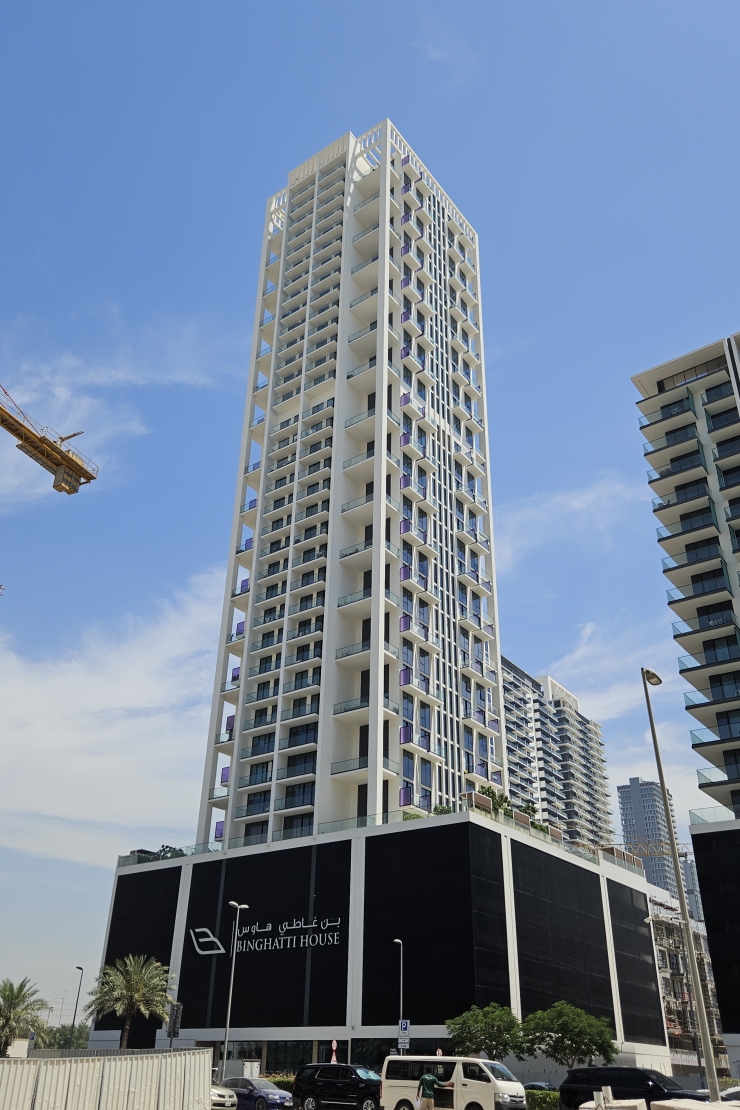
Binghatti House | 2BR Apartment | in JVC | HOT
Binghatti · JVC
1,605,000 AED
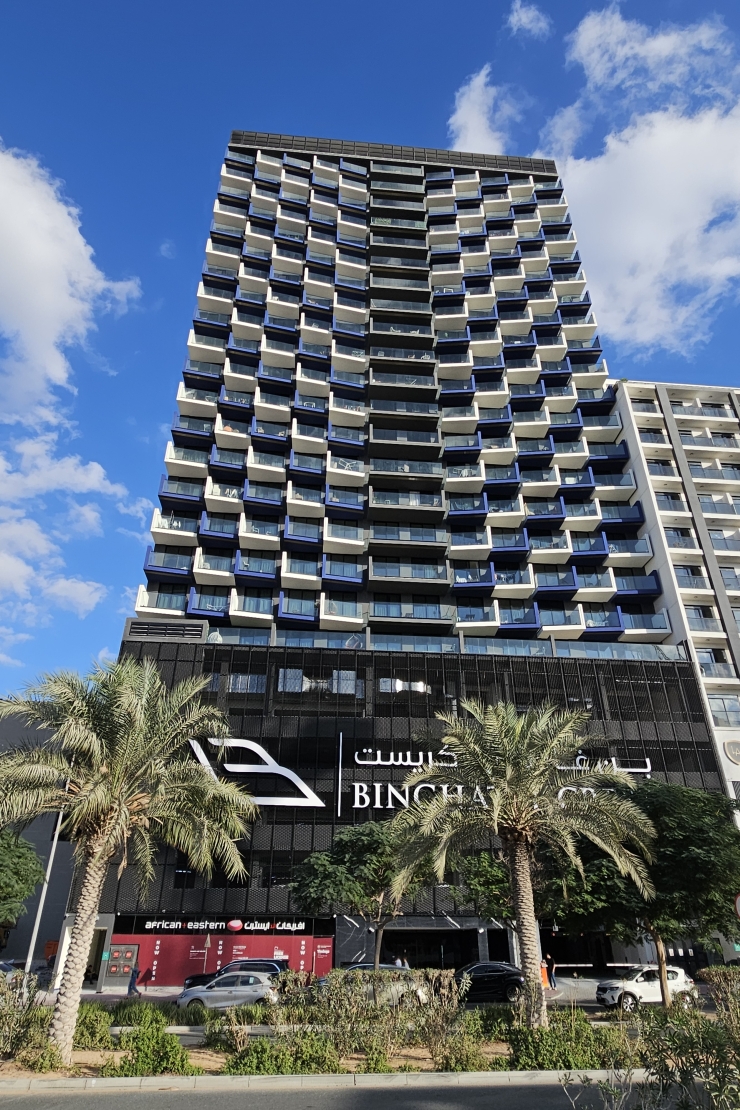
Binghatti Crest | 3BR Apartment | in JVC | HOT
Binghatti · JVC
1,800,000 AED (Furnished)
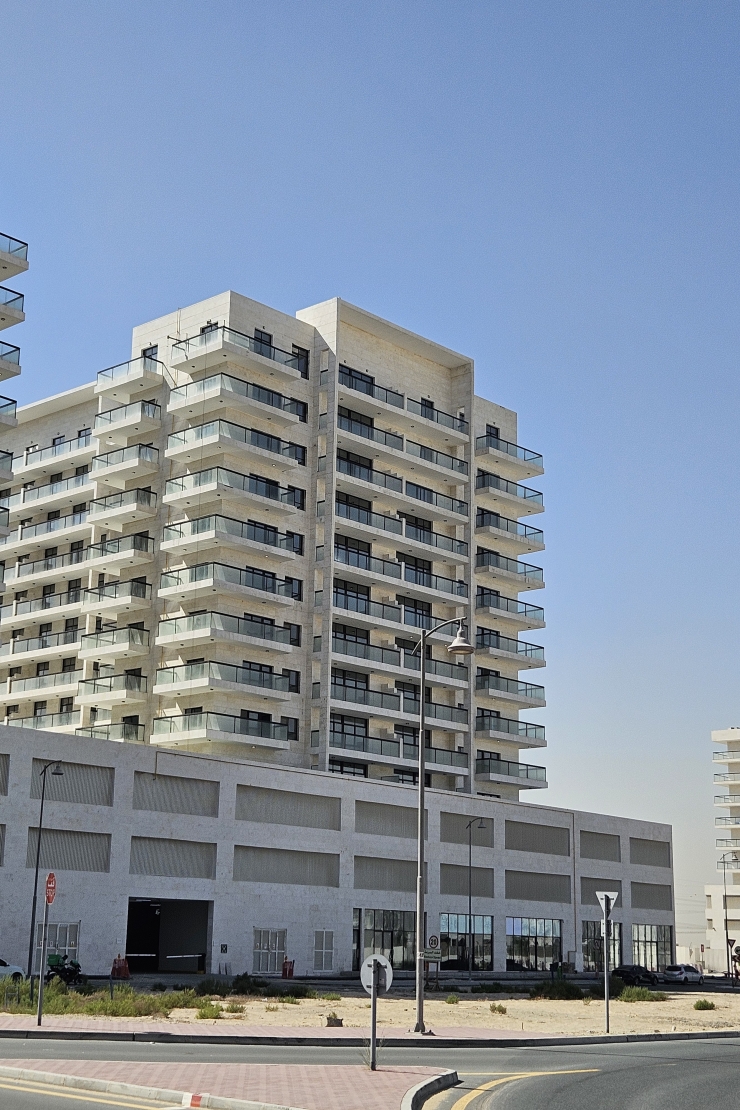
Equiti Home | 1BR Apartment | in Al Furjan | HOT
BNH Real Estate · Al Furjan
970,000 AED
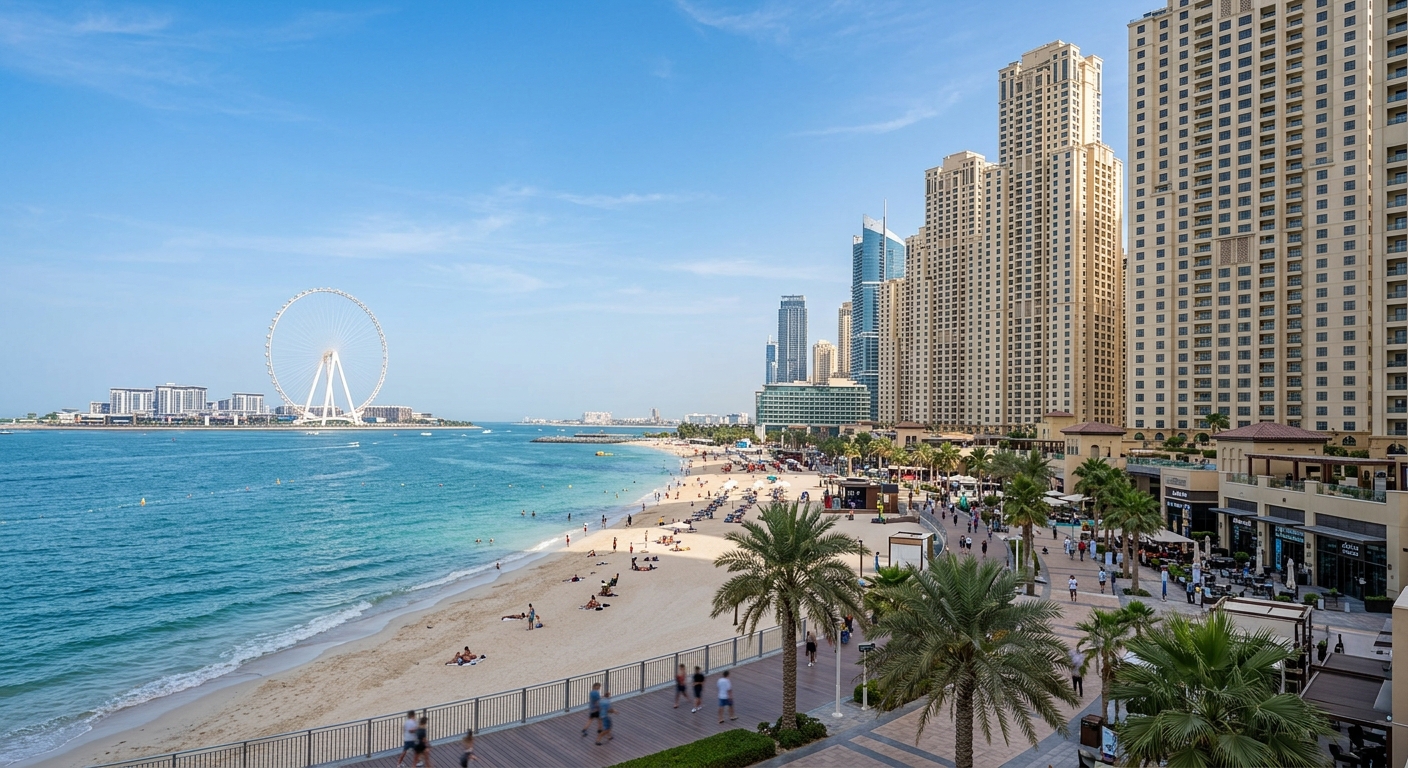
FIVE Luxe Hotel & Residence | 5BR + Maid Hotel Apartment | in JBR | HOT
FIVE Holdings · JBR
25,000,000 AED / 25,000,000 AED (Furnished)
Azizi Gardens | 1BR Apartment | in Meydan MBR | HOT
Azizi · Meydan MBR
930,000 AED
Match My Requirement
Tell us your budget and preferences — we'll match you with live Dubai & Abu Dhabi inventory within 24h.
Related Articles

Dubai Service Charges 2026: The Number That Decides Your Net Yield
Every Dubai yield table quotes gross. Service charges take 12-20% of your rent before anything else does, and because the charge is set per building, two apartments with the same gross yield can end up more than a full point apart on net. The math, area by area, and how to verify any building's approved rate.

Flexi Rent in Dubai: Monthly Rent Instead of Cheques — What It Does to Your Yield and to Your Renewal
The Dubai Land Department launched Flexi Rent on 23 June 2026 with 11 real estate companies, letting tenants pay monthly, quarterly or semi-annually instead of handing over one to four post-dated cheques. It arrives in a market where new villa leases averaged AED 200,000 in Q3 2026 — down from AED 225,000 — while renewal rents rose 10.3%. For landlords it is a retention tool with a cash-flow cost. For tenants it is leverage. Here is how to price it.

Are Dubai Rents Falling? What New Leases Outpacing Renewals Really Means
For the first time since 2023, new Dubai leases outnumbered renewals, at rents 15% below January. What it means for tenants, landlords and investors.